
Why adults use reward charts too
Reward charts are usually something you make for kids: a sticker for brushing teeth, a treat after ten stickers. They work for the same reason with adults. The payoff of most good habits, like better health, savings or a finished degree, is months away. A reward chart puts a small, visible win right after the effort, so the habit has something to show for itself today.
The difference with adults is that nobody else hands out the stickers. You set the rules, you keep the score, and you decide what the rewards are. That makes the design of the chart matter more. (Want the paper version? Our adult sticker chart has a free printable and 50 ideas.)
How to make a reward chart that works
1. Start with three habits, not ten
Pick the few habits you most want to stick this month. Three is plenty. A chart with ten habits on it turns into a list of things you’re failing at by the second week.
Make each one specific enough to tick off without debate: “walk 20 minutes” instead of “exercise more”, “read 10 pages” instead of “read more”.
2. Give each habit a points value
Not every habit costs the same effort. A useful rule: the harder or less fun the habit, the more points it pays.
| Habit | Points per day |
|---|---|
| Drink a glass of water after waking up | 1 |
| Read 10 pages | 4 |
| 30-minute workout | 8 |
| An hour of deep work on the side project | 16 |
Keep the numbers simple. You only need enough range that the hard habits clearly earn more. To turn these values into reward prices, use the calculator in our point system for adults guide.
3. Build a reward menu with prices
This is the part most charts skip, and it’s the part that makes the system fun. Write down rewards you actually want, then give each one a price in points. Stuck for ideas? Here are 70 ways to reward yourself, sorted by cost.
Mix three sizes:
- Small (5–20 points): a fancy coffee, an episode of your show guilt-free, a long bath
- Medium (40–100 points): a takeaway dinner, a new book, a movie night out
- Large (200+ points): new running shoes, a concert ticket, a weekend trip
Small rewards keep the first week exciting. Large ones give you something to save for. If a reward is something you would buy anyway, it still counts: the point is that now you earn it.
Stuck for ideas? The desserts and specials on a dopamine menu make good rewards. Build one in a minute with our free dopamine menu builder.
4. Pay yourself honestly
The chart only works if the points mean something. Two rules help:
- Only claim a reward when you have the points. No borrowing against next week.
- Don’t take the reward anyway on a day you didn’t earn it. If you do, the chart quietly stops working.
If you miss a day, that’s fine. You just don’t earn those points. A missed day costs you a little progress, not the whole system.
5. Review it once a week
Once a week, look at the chart for five minutes and ask:
- Is any habit too easy or too hard for its points? Adjust the value.
- Is there a reward nobody (you) is saving for? Replace it with one you want.
- Has a habit become automatic? Swap it for the next one on your list.
A reward chart is a tool, not a contract. Changing it is part of using it.
Example reward charts
Fitness: workout (8), 10,000 steps (4), stretch before bed (1). Rewards: smoothie (10), a new album (30), running shoes (400).
Study: one focused study session (8), review flashcards (4), tidy desk (1). Rewards: snack break (5), evening off (50), weekend away after exams (500).
Home: dishes done before bed (4), 15-minute tidy (4), plan the week’s meals (8). Rewards: takeaway night (60), a plant or candle (40), a cleaner for a day (300).
Paper chart or app?
A paper chart on the fridge is free and easy to start. For one goal there are ready-made printables: the adult sticker chart, a workout reward chart and a weight loss reward chart. Our printable habit tracker makes one in a minute, with a goal and a reward for each habit, and the chore chart does the same for housework. It gets harder once you track several habits and save for bigger rewards, because you have to add up points and keep a running balance by hand. The free reward tracker does that adding for you in the browser: coins in, rewards out, balance kept. Prefer a spreadsheet? The habit tracker spreadsheet does the same in Excel or Google Sheets and keeps your coin balance.
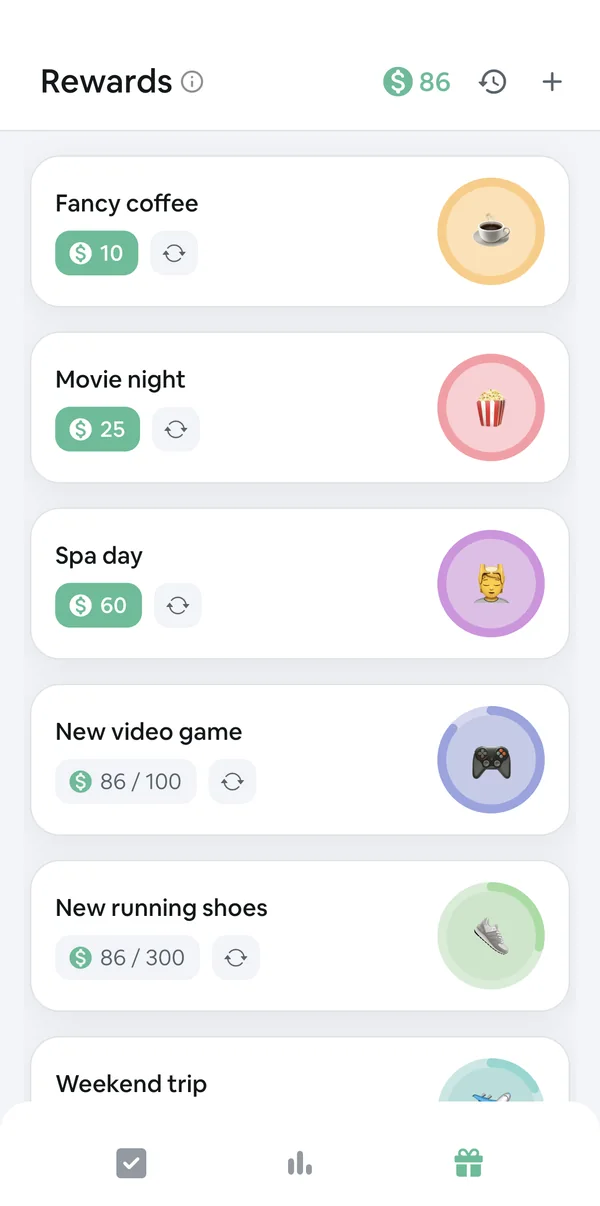
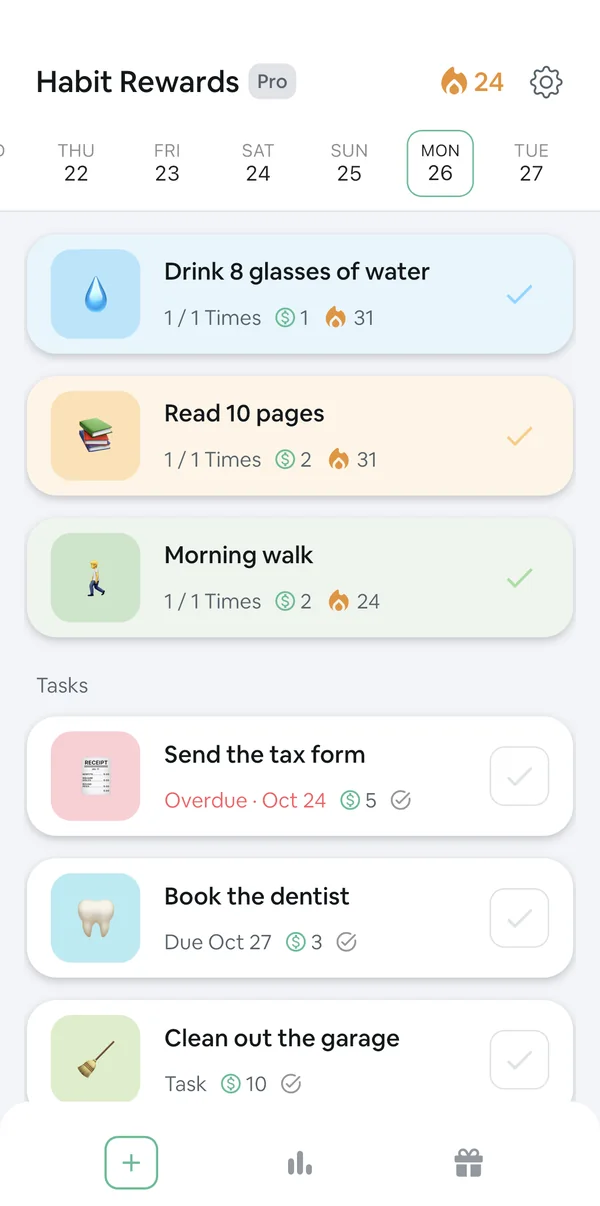
Habit Rewards is a habit tracker built around this exact system. Each habit earns the coins you set for it. Your rewards sit in a list with a coin price. When you complete a habit, you earn its coins. When you have enough, you claim the reward. The app keeps your balance and your streaks, so the weekly review is just a look at the numbers.
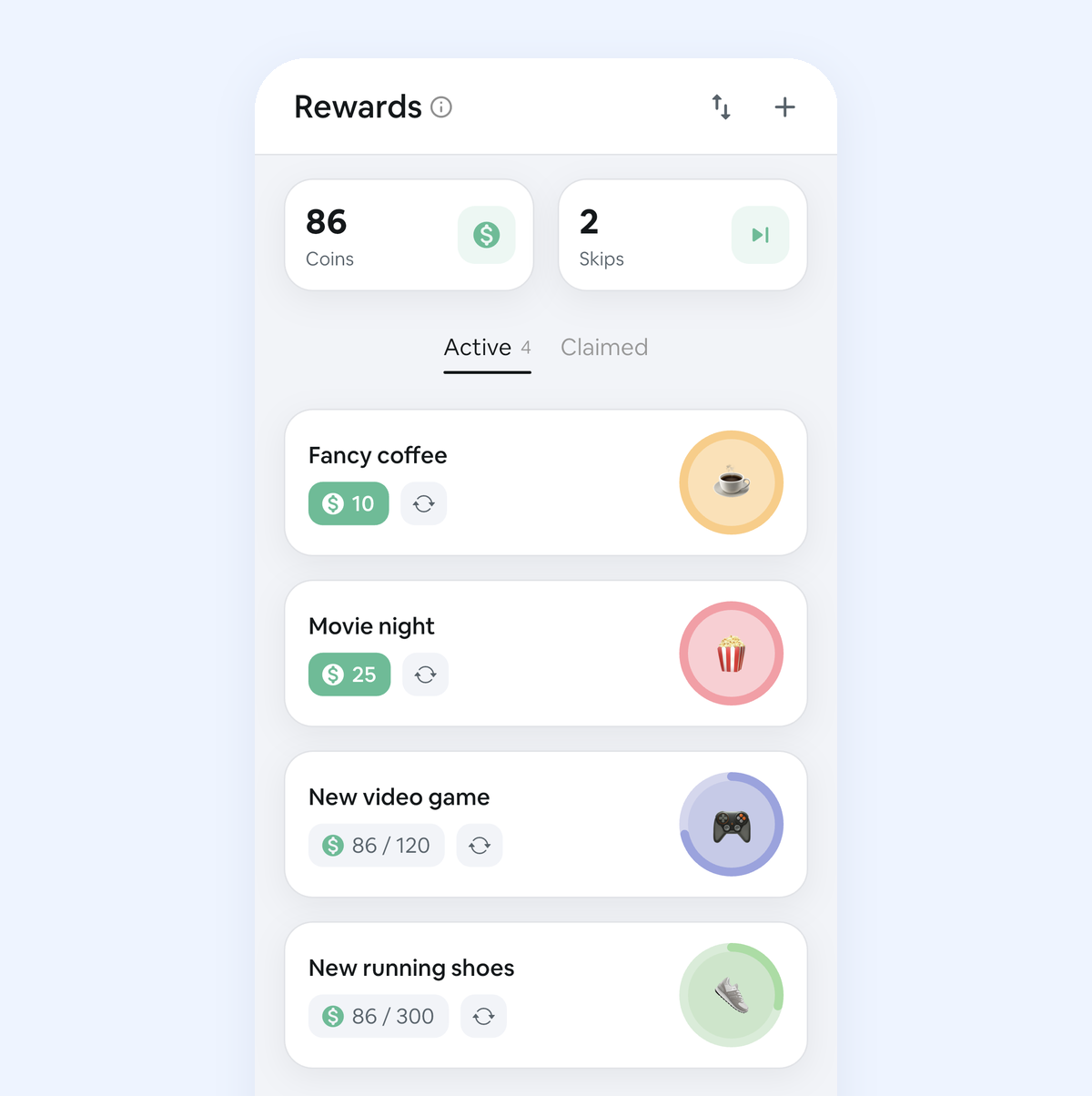
You can start from ready-made reward ideas or write your own. It’s free to download on iPhone and Android.
Reward chart apps for adults
A reward chart app is worth it when it does two things a paper chart can’t: it keeps your points balance, and it lets you price rewards you choose yourself. Badges, streak trophies and pet outfits don’t count. These five do both:
| App | How habits reward you | Your own priced rewards | Platforms | US price |
|---|---|---|---|---|
| Habit Rewards (ours) | Coins: 1, 4, 8 or 16 per habit, or your own number | Yes: a reward list with coin prices | iPhone, Android | Free for 3 habits; Pro $29.99/year with a 7-day trial |
| Habitica | Gold and XP for an RPG avatar | Yes: custom rewards in the Rewards column | iPhone, Android, web | Free; optional subscription |
| LifeUp / ulives | Coins and XP toward skills you define | Yes: a shop you stock | LifeUp on Android, ulives on iPhone | LifeUp $4.99 once; ulives free with a $9.99 upgrade |
| Goal Tracker: Challenges | Points for habits, tasks and focus sessions | Yes: a reward catalog with thresholds you set | iPhone, Android | Free; Pro plans from $0.99/month |
| Dailies | Coins and XP across four life areas | Yes: a personal shop | iPhone, Android | Free; $1.99/month or $14.99/year |
US App Store prices on October 22, 2026; check the store before you buy. Pick Habitica if you want a game with a party and quests (and price its custom rewards so the gold still means something), LifeUp or ulives if you like building your own system in detail, and Habit Rewards if you want the chart above with the adding done for you. All eight apps we looked at, with ratings and what each one’s “reward” really is, are in apps that reward you for completing habits.
Quick recap
- Pick three specific habits.
- Give each a points value: harder habits earn more.
- Write a reward menu with small, medium and large prices.
- Only claim what you’ve earned.
- Review and adjust once a week.
That’s a reward chart for adults: a small, honest payoff for the habits that would otherwise pay off only someday.
Try Habit Rewards: the habit tracker that rewards you
Every habit you check off earns you coins. Put a coin price on the treats you want and claim them once you've earned them. Free for three habits, on iPhone and Android.
 On a computer? Scan it with your phone to open the App Store or Google Play.
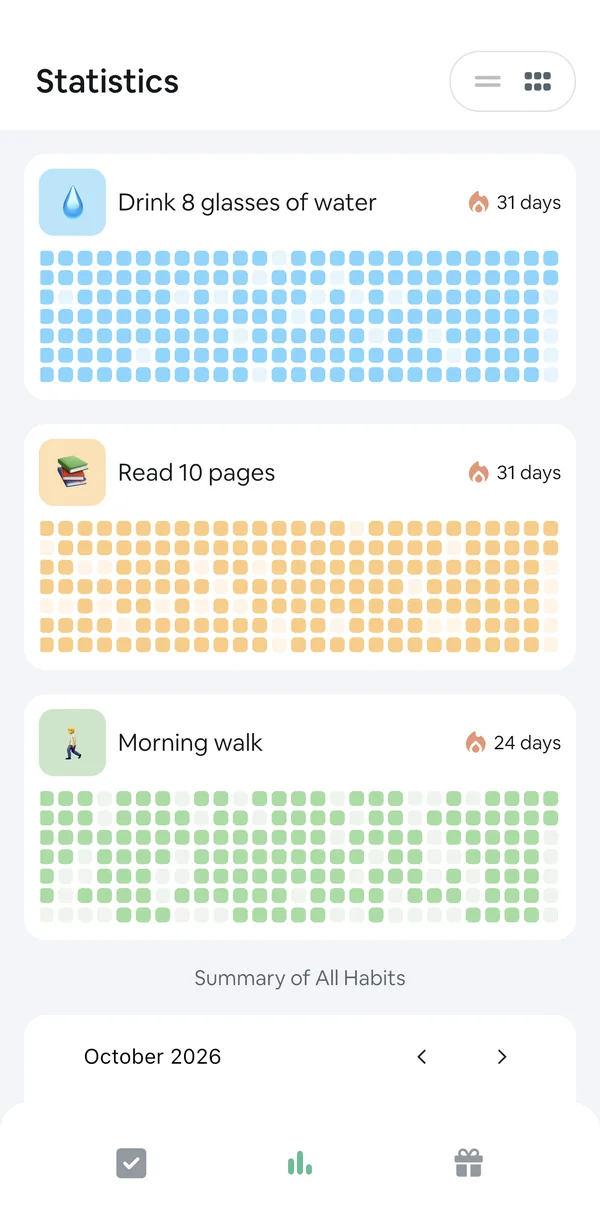
Using Notion?
Start with our free Notion habit tracker and formulas, or get the aesthetic Notion Habit Tracker template with heatmaps and streaks.
More articles you may be interested in:
- Free Notion Habit Tracker Templates (and How to Build Your Own)
- Trigger, Behavior, Reward: The Habit Loop Explained With Examples
- Advent Calendar Challenge Ideas 2026: 24 Small Habits (Free Printable)
- Holiday Run Streak 2026: Rules, Dates and a 37-Day Tracker
- Rewards for Achieving Goals: 80 Ideas, Sized to the Goal
- How to Reward Yourself Without Spending Money (and for Saving It)
Rather track it on your phone? In Habit Rewards every check-off earns coins, and you spend them on rewards you set yourself. Free on iPhone and Android for up to 3 habits.
Get the appFree habit tools and printables
Free, in your browser, no sign-up.