
An adult sticker chart is the chart you had on the fridge as a kid, pointed at the habits you care about now: one sticker on each day you do the thing, and a reward when the stickers add up. A free printable 30-day version is right below, then 50 ideas and the rules. It works for adults for the same reason it works for children. The real payoff of most good habits is weeks or months away, and a sticker is a small win you can see today.
The difference is that nobody hands you the stickers. You pick the habit, you set the price of each reward, and you keep yourself honest. The rules below are what make that part work.
Free printable adult sticker chart
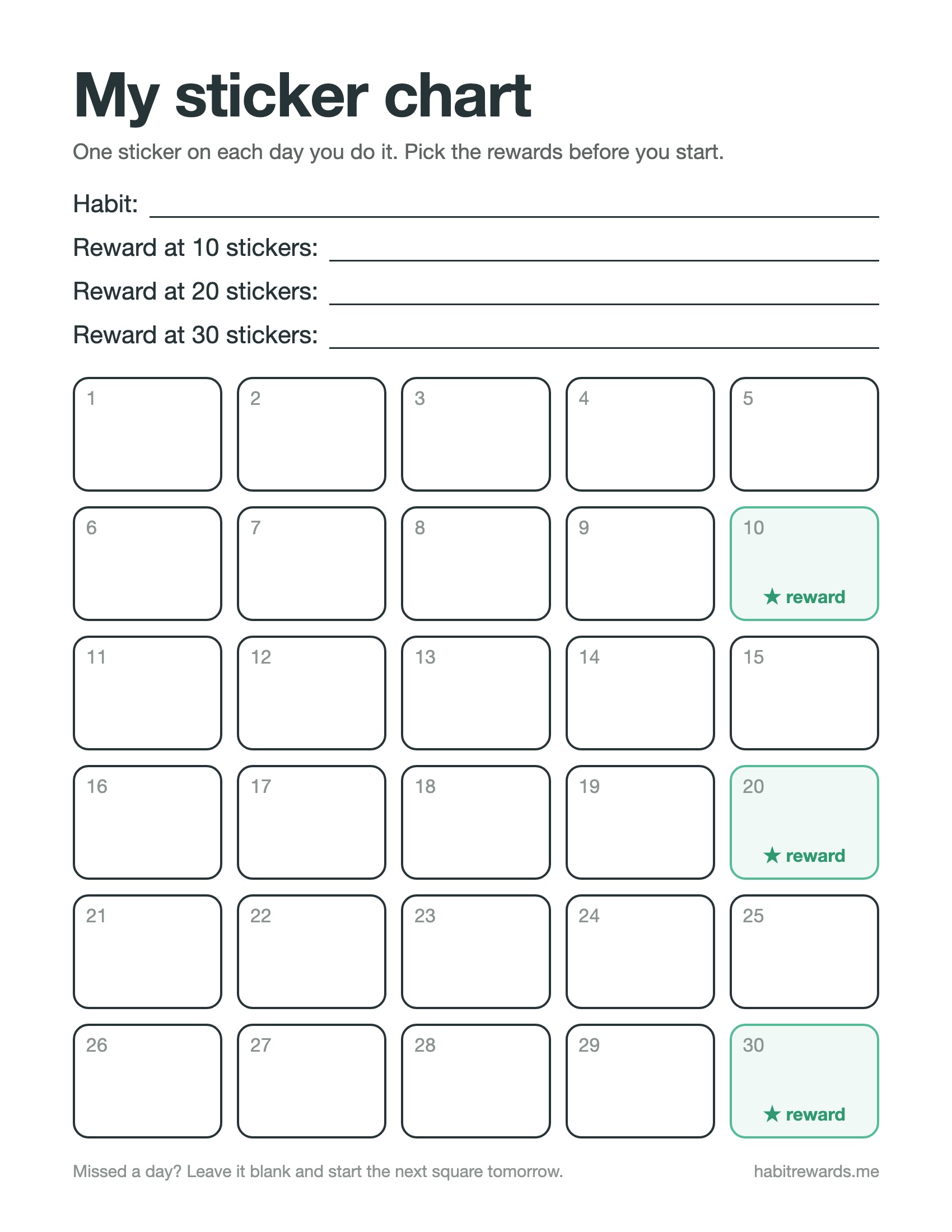
Download the sticker chart PDF (US Letter, prints on A4) → or open it as an image. One habit, 30 squares, and three reward squares at 10, 20 and 30 stickers. Write the habit and the three rewards at the top before day one.
Tracking more than one habit? The printable habit tracker makes a monthly grid with a goal and a reward for each habit, and the reward tracker keeps a points balance if you’d rather spend stickers like money.
How to set one up
- Pick one habit. One per chart, done most days: a 20-minute walk, 10 pages of reading, no phone in bed. Two or three charts at most to start.
- Make it a yes-or-no. “Went to the gym” works; “ate better” doesn’t, because you’ll argue with yourself about whether it counts.
- Price the rewards before you start. A small one at 10 stickers, a medium one at 20, a real one at 30. Writing them down first stops you from rewarding yourself for a so-so week.
- Put it where you’ll see it. Fridge, bathroom mirror, the inside of your wardrobe door. A chart in a drawer is forgotten by day four.
- Sticker the same day. Keep the sheet of stickers next to the chart so it takes five seconds.
Sticker chart rules for adults
- A sticker only for a day you did it, on that day. No back-filling on Sunday from memory.
- No stickers in advance, and no rewards before the milestone. “I’ll earn it later” is how the chart stops meaning anything.
- A missed day stays blank. Don’t cross it out or take stickers away; just do the next square tomorrow. Try never to miss two days in a row.
- Rewards you’d actually want. If the 30-sticker reward is something you’d buy anyway, it isn’t a reward. If it costs more than the habit is worth to you, scale it down.
- Change one thing at a time. If the chart stalls, make the habit smaller or the reward closer, not both at once.
How many stickers should a reward cost?
A simple ladder that works for most people:
| Stickers | Reward size | Examples |
|---|---|---|
| 5–10 | Small | A fancy coffee, a face mask, an hour of a game with no guilt |
| 15–20 | Medium | Takeout night, a new book, a cinema ticket |
| 30+ | Big | Concert tickets, new running shoes, a day trip |
Hard habits should earn faster than easy ones: a sticker for a workout is worth more than a sticker for drinking water. If you want weighted points instead of one sticker per day, that’s a token economy, and we have 70 reward ideas to price.
50 adult sticker chart ideas
Health
- 20-minute walk
- Workout or gym session
- 8 glasses of water
- Stretch for 10 minutes
- Take vitamins or medication
- In bed by 11
- Fruit or vegetables with every meal
- Floss
- No alcohol today
- 10 minutes of meditation
Home
- Dishes done before bed
- Make the bed
- 15-minute tidy
- One load of laundry, folded
- Bins out
- Cook dinner instead of ordering
- Water the plants
- Clear the kitchen counter
- Wipe the bathroom sink
- Put away what you used
Work and study
- Inbox to zero
- One hour of deep work
- Study for 30 minutes
- Finish the hardest task first
- Plan tomorrow before logging off
- Practise a language for 15 minutes
- Write 500 words
- Read 10 pages
- No social media before noon
- Apply for one job
Money
- No-spend day
- Log every purchase
- Packed lunch
- Moved money to savings
- Unsubscribed from one shop email
- Checked the bank balance
- Made coffee at home
- Sold one thing you don’t use
- Paid a bill on the day it arrived
- Waited 24 hours before an online purchase
Funny (but real)
- Replied to that text
- Drank water before coffee
- Went outside on purpose
- Took the bins out before the truck came
- Didn’t say “just one more episode”
- Phone stayed out of the bathroom
- Answered an email without rewriting it four times
- Ate a vegetable that wasn’t on a pizza
- Made the phone call
- Went to bed when tired, not when the phone died
Sticker charts for adults with ADHD
Sticker charts suit ADHD brains for the same reason they suit kids: the reward is immediate and you can see it. The problem is that the novelty wears off fast. A few things that help:
- Shorter horizons. A 7-day chart with a reward at the end beats a 30-day one you stop looking at in week two.
- Rotate the stickers. New sticker sheets, new colours, new themes every week or two keep it interesting.
- Smaller habits than you think. “Open the laptop and start the task” counts. Getting started is the hard part.
- Visible and close. Next to where the habit happens, not in another room.
We wrote more about this in our ADHD reward system for adults, including a reward menu you can copy.
A sticker chart app for adults
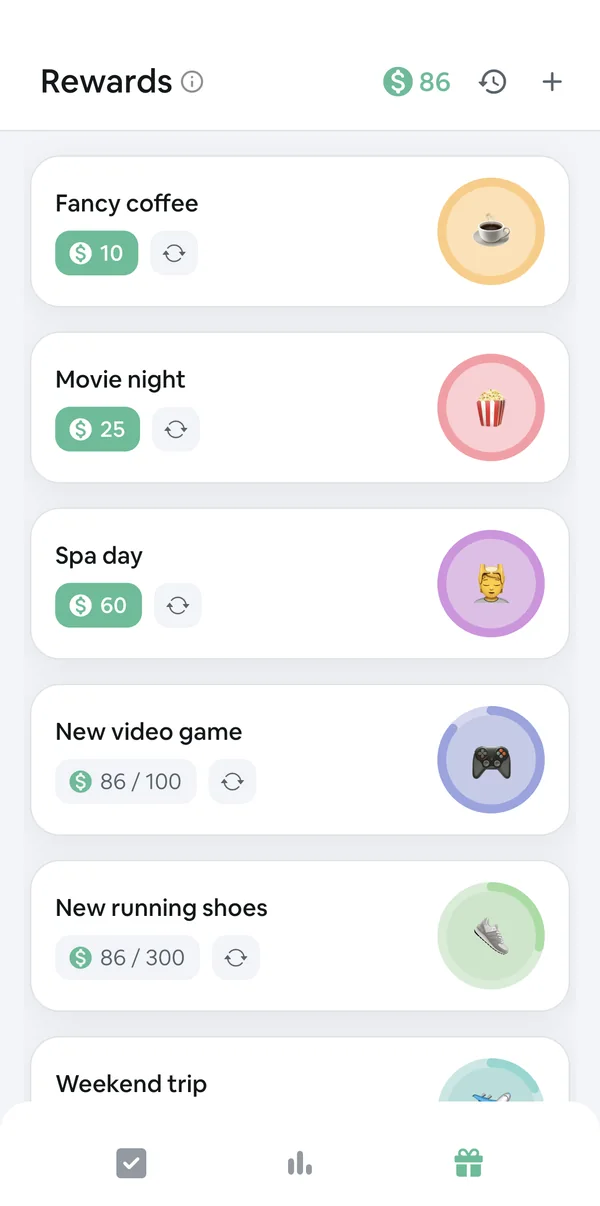
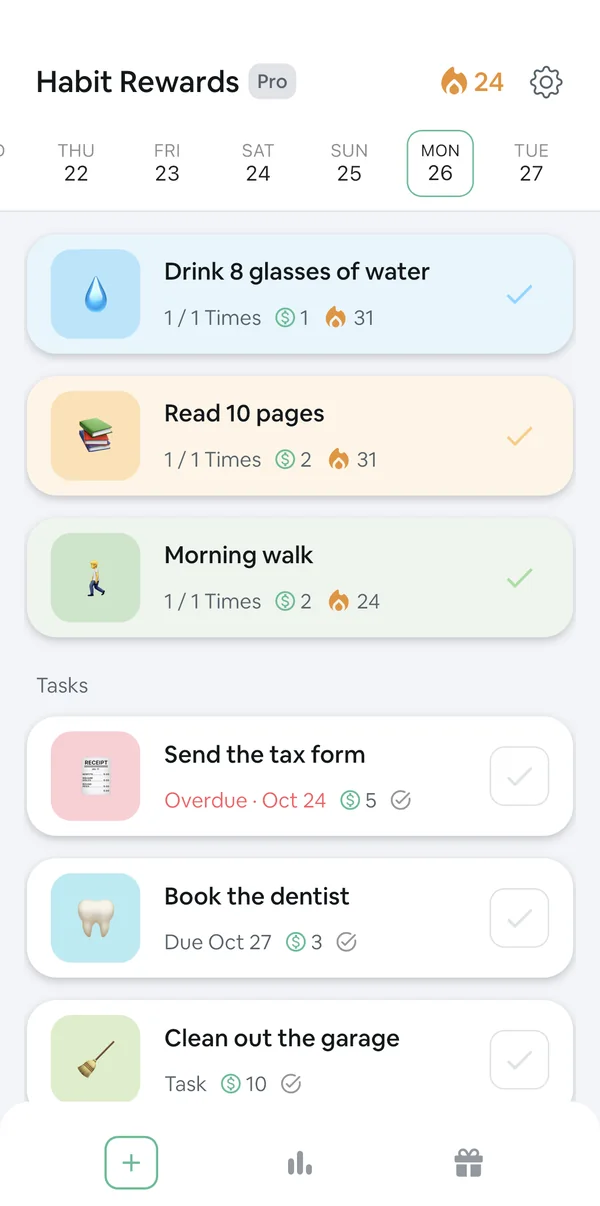
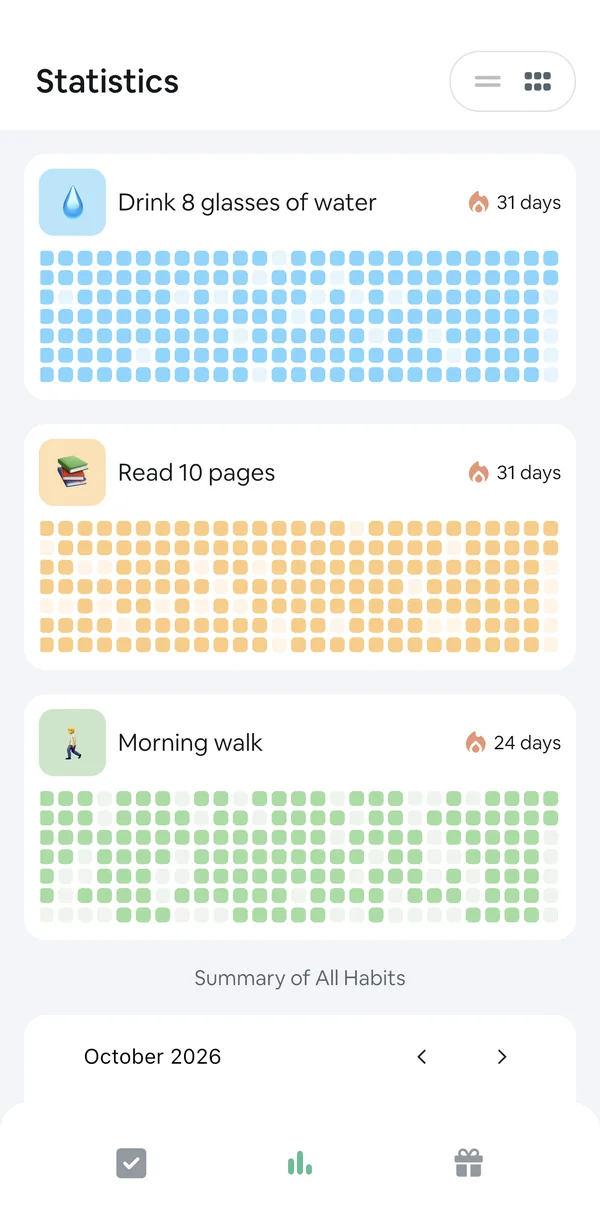
Paper is great at home. It’s less great at 11 p.m. on the sofa or when you’re travelling, and a paper chart can’t remind you. Our app, Habit Rewards, is a sticker chart that works the same way on your phone: each habit earns coins when you check it off (harder habits earn more), you write your own rewards and give each one a coin price, and you claim them once you’ve earned enough. Streaks, reminders and home-screen widgets are built in.
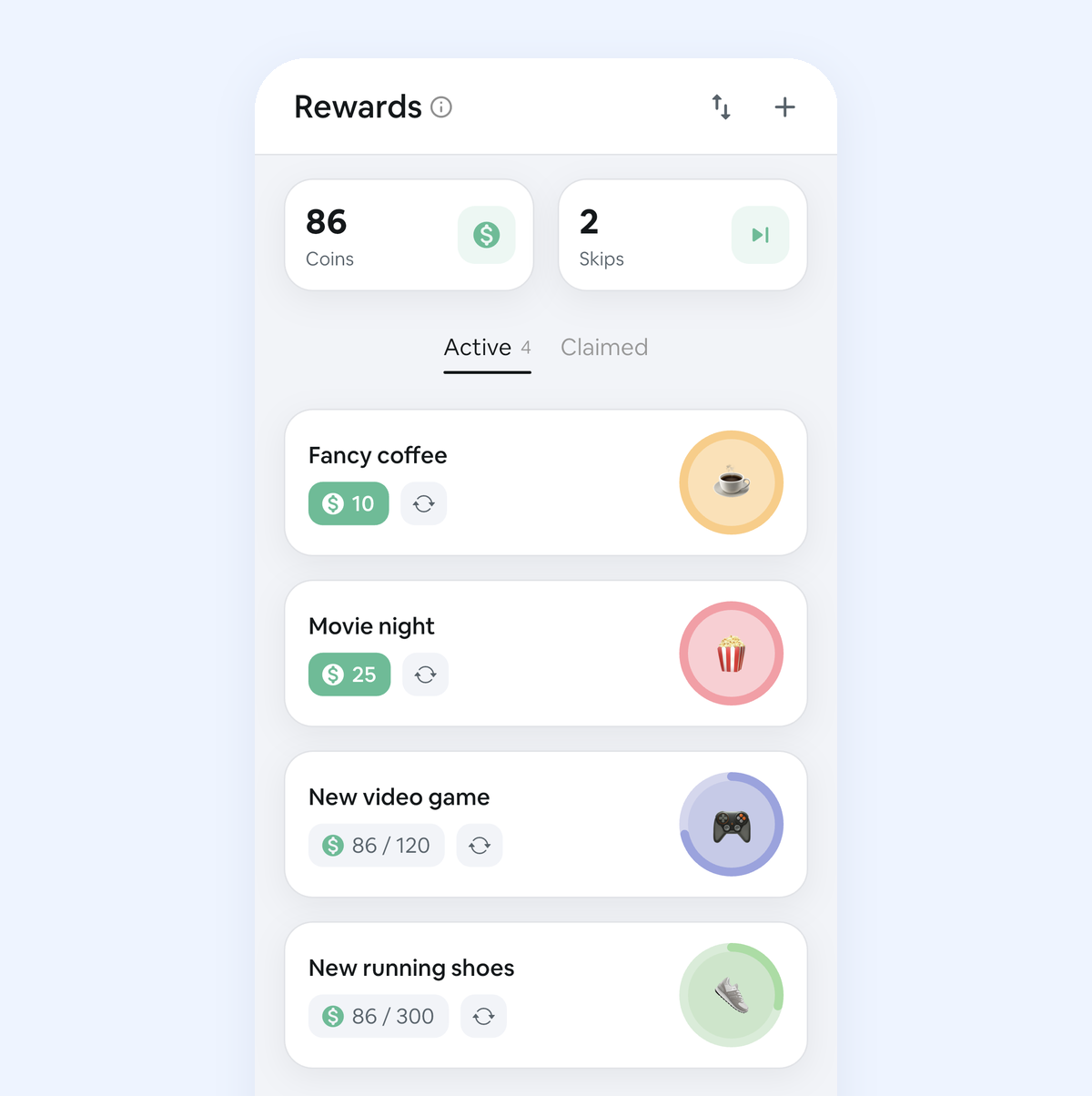
It’s free for three habits and three rewards on iPhone and Android. For the full comparison of apps, see our reward chart for adults guide.
FAQ
Do sticker charts work for adults? Yes, as long as the habit is clear, the sticker happens the same day and the rewards are set before you start. They work because they turn a long-term payoff into a win you can see today.
What do you put on an adult sticker chart? One habit you want to do most days, written as a yes-or-no (“20-minute walk”), plus the rewards you’ll get at set sticker counts. See the 50 ideas above.
How many stickers should it take to earn a reward? Start with a small reward at 5–10 stickers, a medium one at 15–20 and a bigger one at 30. Make the first reward reachable in the first week or two.
Is there a free printable adult sticker chart? Yes: our printable 30-day sticker chart (PDF) has reward squares at 10, 20 and 30. For several habits on one page, use the printable habit tracker.
What if I miss a day? Leave the square blank and carry on tomorrow. Don’t take stickers away; the aim is never to miss two days in a row.
Is there a sticker chart app for adults? Habit Rewards works like a sticker chart on your phone: habits earn coins, and you spend them on rewards you choose. It’s free for three habits on iPhone and Android.
Try Habit Rewards: the habit tracker that rewards you
Every habit you check off earns you coins. Put a coin price on the treats you want and claim them once you've earned them. Free for three habits, on iPhone and Android.
 On a computer? Scan it with your phone to open the App Store or Google Play.

Using Notion?
Start with our free Notion habit tracker and formulas, or get the aesthetic Notion Habit Tracker template with heatmaps and streaks.
More articles you may be interested in:
- Free Notion Habit Tracker Templates (and How to Build Your Own)
- Trigger, Behavior, Reward: The Habit Loop Explained With Examples
- Advent Calendar Challenge Ideas 2026: 24 Small Habits (Free Printable)
- Holiday Run Streak 2026: Rules, Dates and a 37-Day Tracker
- Rewards for Achieving Goals: 80 Ideas, Sized to the Goal
- How to Reward Yourself Without Spending Money (and for Saving It)
Rather track it on your phone? In Habit Rewards every check-off earns coins, and you spend them on rewards you set yourself. Free on iPhone and Android for up to 3 habits.
Get the appFree habit tools and printables
Free, in your browser, no sign-up.