Streak Tracker: Count Your Days in a Row
Pick a habit and the day you started, then tap each day you did it. You'll see your current streak, your longest one and the date you reach your next milestone. Come back tomorrow and tap again: everything stays in your browser, no sign-up.
Tap a day to cycle: done, skipped, missed, not marked. Today only breaks your streak once it's over.
How a streak is counted
A streak is the number of days in a row you did the habit, counting back from today. This tracker counts today if you've marked it done; if you haven't yet, it counts from yesterday, so your streak doesn't drop to zero at breakfast. A day marked missed (today included), or a past day you left unmarked, ends the streak. Your longest streak is the longest run anywhere between your start date and today.
Skipped days are for the days you planned not to do it: a rest day, a sick day, a flight. Decide your rule before you start (for example, at most one skip a week), or every hard day becomes a skip.
"Don't break the chain", and what to do when you do
The chain method is simple: mark a calendar every day you do the habit, and the growing row of marks becomes a reason to keep going. It's usually credited to Jerry Seinfeld, who has said it wasn't his idea. It works because the reward is visible and immediate, while the real payoff of most habits is months away.
The weak spot is the day after a miss. A streak that took 40 days to build can feel worthless at 0, and that's when people stop. In a study that followed 96 people forming a new daily habit (Lally and colleagues, 2010), missing one opportunity did not materially affect how the habit formed. What matters is the next day. James Clear's rule for it in Atomic Habits: never miss twice. Your longest streak stays on the record either way.
Streak milestones worth a reward
| Days in a row | Why it's a good checkpoint | A reward that fits |
|---|---|---|
| 7 | A full week, including a weekend | Something small: a good coffee, an episode guilt-free |
| 30 | A month of proof that it fits your real life | A new book, a meal out |
| 66 | The median time to automaticity in Lally's study (the range was 18 to 254 days) | Something you've been putting off buying |
| 100 | Three digits | A bigger treat, planned from day 1 |
| 365 | A year | The one you'll remember |
Price the rewards before you start, so a milestone means something specific. There's a list of 70 ideas in ways to reward yourself, and the 30-day challenge tracker prints a dated month with rewards on days 7, 14, 21 and 30. Tracking several habits of different difficulty? The discipline tracker scores your week in points.
Track streaks for all your habits
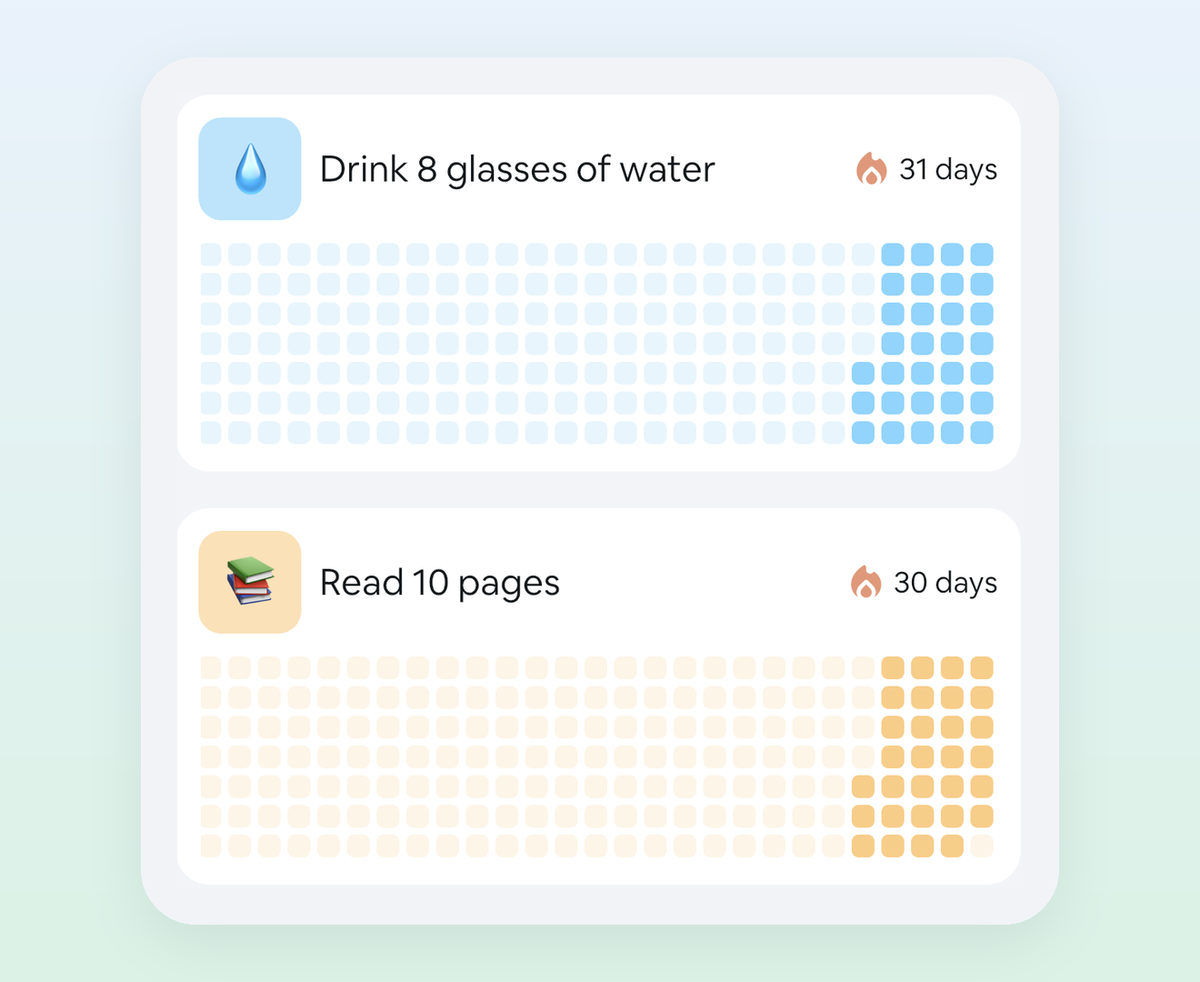
This page tracks one habit. Habit Rewards keeps a streak for every habit, shows your current and longest streak for each, and adds coins: every check-off earns them, and you spend them on rewards you price yourself. A Skip costs 10 coins and keeps the streak alive on a day you can't do the habit. Forgot to check off yesterday? Pick the date on Home and check it off. Home-screen widgets let you check off a habit without opening the app. It's free on iPhone and Android for up to 3 habits.