Habit Stacking Template
Habit stacking means tying a new habit to something you already do every day: "After I pour my morning coffee, I will write down my top task." Pick an anchor for each part of your day, stack one to three small habits on it, add a reward at the end, then print your stacks with a week of checkboxes. Free, no sign-up, saved in this browser.
The habit stacking formula
James Clear's version in Atomic Habits is one sentence: "After [current habit], I will [new habit]." It builds on BJ Fogg's Tiny Habits method, where the habit you already do is called the anchor. Once the first new habit sticks, it becomes the anchor for the next one, and you get a chain:
| After I… | I will… |
|---|---|
| pour my morning coffee | write down the one task that matters today |
| write down my top task | drink a full glass of water |
| drink a glass of water | do ten squats |
The sentence works because it answers when and where in advance. Psychologists call this an implementation intention. In Gollwitzer and Sheeran's 2006 review of 94 studies, people who made "if-then" plans reached their goals noticeably more often than people who only set the goal.
How to fill in the template
- Pick an anchor you never skip. Brushing your teeth, the first coffee, sitting down at your desk, getting into bed. It has to happen every day, at about the same time.
- Make the new habit tiny. Two minutes or less to start: one page, ten squats, one line in a journal. You can do more once you've started. You can't skip the small version.
- Match place and size. Stack a habit on an anchor in the same room. "After I brush my teeth, I will floss one tooth" works. "After I brush my teeth, I will go for a run" rarely does.
- Stop at three. A long chain breaks at the first link you miss. Start with one stack per part of the day, one to three habits each.
- End with a reward. Clear's fourth law is "make it satisfying" and Fogg ends each recipe with a celebration. Put something you enjoy at the end of the stack, so finishing it is the good part.
Want more ideas?
Our post habit stacking examples has 80 stacks sorted by time of day, for exercise, for ADHD, for work and for home, plus the mistakes that make stacks fall apart. To put times on a whole morning or evening, try the routine checklist maker.
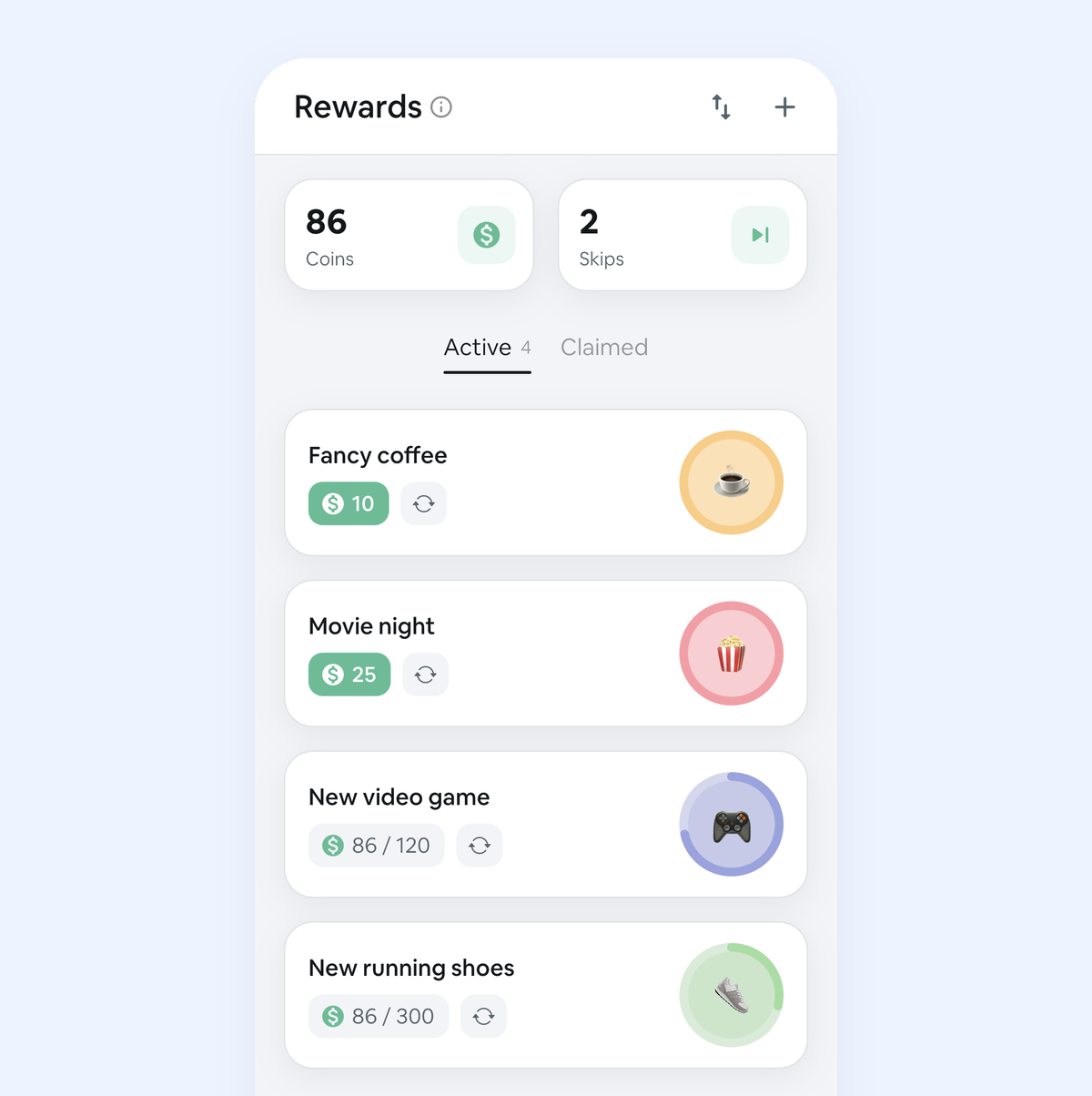
Turn the reward into coins
A printed stack tells you what to do. It doesn't keep score. In Habit Rewards every habit you check off pays coins, and you spend them on rewards you price yourself, like an episode of a show or a takeaway. Put your morning habits in a Morning group and your evening ones in an Evening group, drag them into the order you do them, and write the "After I…" line in each habit's description. It's free for three habits on iPhone and Android.