
The short version
Trigger, behavior, reward is the simplest way to describe how a habit works:
- Trigger: something tells you to act. A time, a place, a feeling, the person before you, the thing you just did.
- Behavior: the action itself.
- Reward: what you get out of it, right after.
When the same trigger keeps leading to the same behavior, and the behavior keeps paying off, the loop runs with less and less thought. That’s a habit.
Your phone buzzes (trigger), you check it (behavior), there’s a message from a friend (reward). Repeat that a few thousand times and you check your phone even when it hasn’t buzzed.
Four versions of the same loop
You’ll find this loop under different names. They describe the same idea with different emphasis.
| Model | Steps | Source |
|---|---|---|
| Habit loop | Cue → Routine → Reward | Charles Duhigg, The Power of Habit (2012) |
| Four laws | Cue → Craving → Response → Reward | James Clear, Atomic Habits (2018) |
| Tiny Habits | Prompt → Behavior → Celebration | BJ Fogg, Tiny Habits (2019) |
| Hook model | Trigger → Action → Variable reward → Investment | Nir Eyal, Hooked (2014) |
Behavior analysts use an older relative, the ABC model: antecedent, behavior, consequence. It’s the same structure with clinical words.
What the versions add:
- Clear’s craving is the reason the cue matters: you don’t want the action, you want the change it brings.
- Fogg’s celebration is a reward you give yourself on purpose, a small “yes!” right after the behavior, to make it feel good.
- Eyal’s variable reward explains why apps are hard to put down: you don’t know what you’ll get, so you keep checking. His model was written for product designers, which is why it’s worth knowing when you try to break a phone habit.
Examples of the loop in everyday life
| Trigger | Behavior | Reward |
|---|---|---|
| Sitting down at your desk | Open social media | Something new and interesting |
| Feeling stressed at 3 pm | Get a snack | Relief and a break |
| Getting into bed | Scroll for an hour | No need to face the day ending |
| Morning coffee is brewing | Take your vitamins | The coffee, a second later |
| Putting on running shoes | Go for a run | A clear head, and a tick on the tracker |
The first three are habits most people want to break. The last two were built on purpose: an existing routine is the trigger, and the reward is close in time.
Why the reward is the step that decides
Triggers start a behavior. Rewards are what make it come back.
The catch is timing. Bad habits usually pay right away: the snack tastes good now. Good habits usually pay later: the run makes you fitter in a few months. A brain that learns from what happens right after an action will keep picking the snack.
So the most useful thing you can do when building a habit is to add a reward that arrives right away, while the real payoff is still on its way. A few ways to do that:
- Celebrate. Fogg’s approach: a fist pump or a “nice” out loud, the moment you finish.
- Bundle. Only listen to your favorite podcast while you walk. The behavior and the reward come together.
- Pay yourself points. Each time you do the habit, give yourself a few points or coins, and let them buy rewards you actually want. This is the idea behind a token economy: the points arrive now, the treat comes when you’ve earned enough.
How to design your own loop
Use this as a worksheet for one habit:
- Behavior: make it small and specific. “Read 10 pages,” not “read more.”
- Trigger: attach it to something you already do every day. “After I pour my morning coffee, I read 10 pages.” Clear calls this habit stacking.
- Immediate reward: decide what happens in the first minute after. A tick, a celebration, a few points.
- Later reward: decide what the points add up to. A book you want, a movie night, something you’ll look forward to.
- Review weekly: if the loop isn’t firing, change one part. Usually the trigger is too vague or the reward is too far away.
To break a habit, run the loop in reverse: remove or hide the trigger (phone in another room), make the behavior harder (log out), and find a better behavior that gives a similar reward (a short walk also gives a break).
Common mistakes
- Vague triggers. “In the evening” isn’t a trigger. “After I brush my teeth” is.
- Rewards that undo the habit. A big dessert for every workout makes the habit feel like a trade.
- Only long-term rewards. “I’ll be healthier” is true, and it’s too far away to steer what you do today.
- Starting five loops at once. Build one or two, then add more when they run on their own.
Putting the loop in an app
Habit Rewards is a habit tracker built around the reward step. Each habit you check off pays 1, 4, 8 or 16 coins depending on how hard it is, so there’s an immediate payoff every time. Your rewards each have a coin price you set, and you claim one when your balance covers it. Reminders can act as the trigger, and the app keeps your streaks.
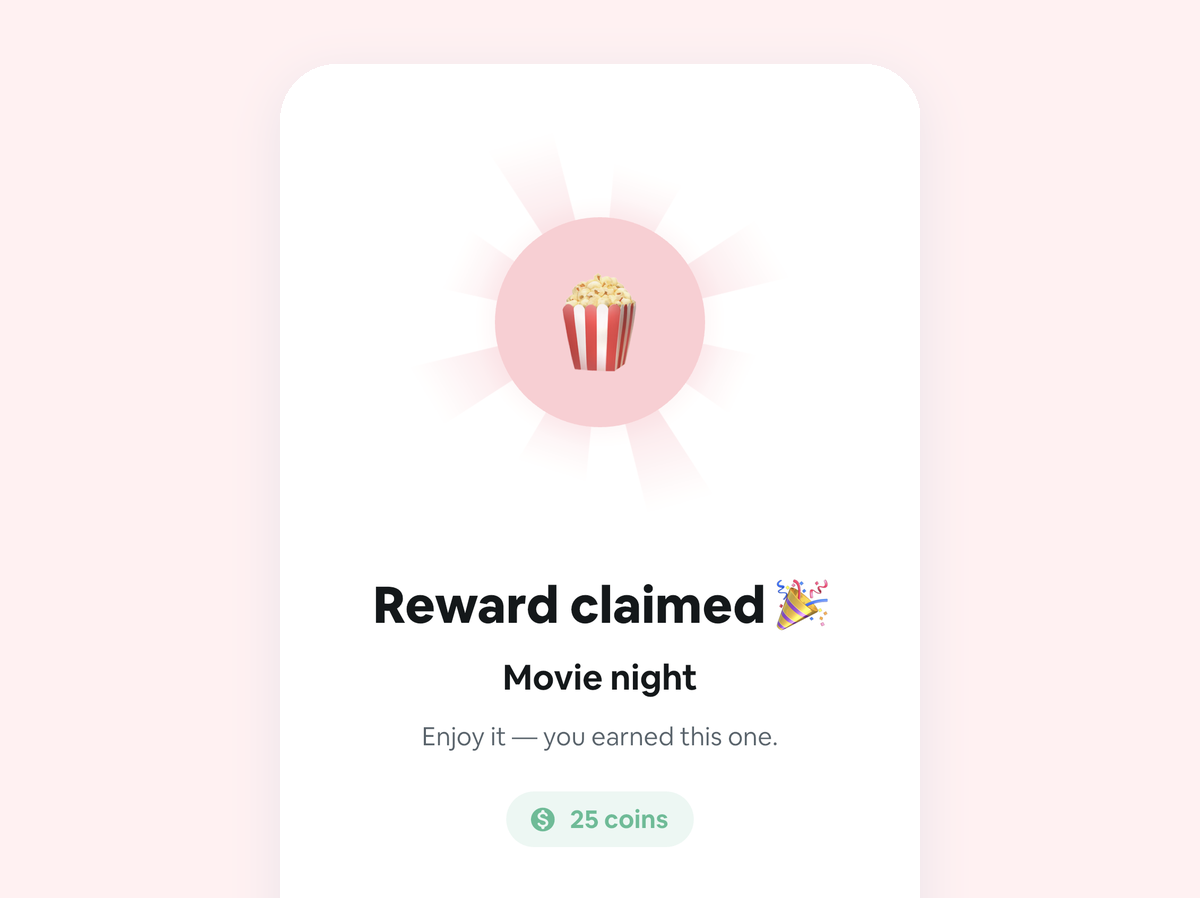
It’s free for up to three habits on iPhone and Android. If you want ideas for what the coins should buy, start with 70 ways to reward yourself.
FAQ
Is it cue-routine-reward or trigger-behavior-reward? Both. Duhigg’s book made “cue, routine, reward” popular. “Trigger, behavior, reward” says the same thing in plainer words, and “trigger” is also the word Eyal uses in the Hook model.
How long does it take for a loop to become a habit? It varies a lot by person and habit. A 2009 study by Phillippa Lally and colleagues at University College London found a median of 66 days for a daily behavior to become automatic, with a range from 18 to 254 days. Missing a single day didn’t derail the process.
Does the reward have to be big? No. Fast matters more than big. A small reward right after the behavior does more than a large one weeks later.
Quick recap
- Every habit is a trigger, a behavior and a reward.
- Duhigg, Clear, Fogg and Eyal describe the same loop with different emphasis.
- The reward decides whether the loop repeats, and it has to come quickly.
- Build a habit by attaching it to an existing trigger and adding an immediate reward.
- Break one by removing the trigger and swapping the behavior.
✅ Try Habit Rewards App
A simple habit tracker app that helps you build better habits, achieve your goals
- Neat design with beautiful grids
- Visualize your progress at one glance
- Set reminders for your habits
- Customize rewards you desire for your achievements
- Set flexible habits and frequency
- Start now for free
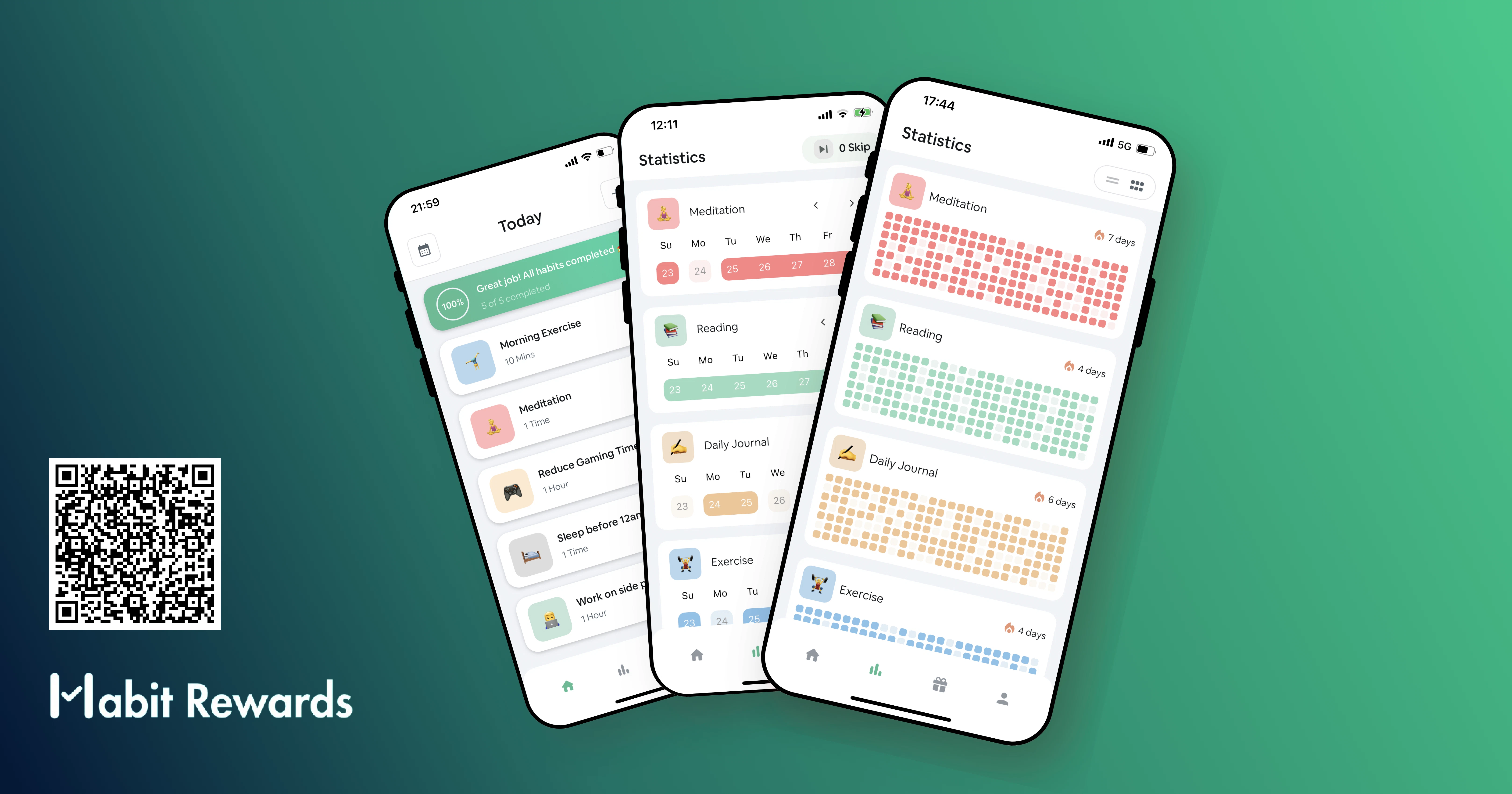
Habit Rewards App is a simple habit tracker with rewards to help your achieve your goals.
Scan the QR code to download from the App Store.

Using Notion?
Build better habits and achieve your goals with this nice Notion Habit Tracker template.
More articles you may be interested in:
Free habit tools and printables
Free, in your browser, no sign-up.