
A realistic resolution is one you could keep on a bad day. “Get in shape” isn’t one: it has no finish line and no daily step. “Walk for 20 minutes after lunch” is. You’ll know tonight whether you did it.
Every idea below comes as a pair: the resolution, and the small daily habit that keeps it. Pick three, not ten.
What makes a resolution realistic
- It’s a daily (or weekly) action, not an outcome. You control whether you read 10 pages. You don’t control whether you finish 30 books.
- It’s something to do. In a 2020 study of about 1,000 resolvers (Oscarsson and colleagues, PLOS ONE), “do” resolutions beat “stop” resolutions after a year, 59% to 47%. Where you’re quitting something, count the days you go without.
- It fits your worst day. If it only works when you’re rested and free, it’ll fail in the first busy week.
- It’s small enough to start on January 1st. You can grow it in February.
Health (8)
- Drink more water → a glass of water with every meal
- Eat more vegetables → one vegetable at dinner
- Sleep better → lights out by 11
- Cook more → dinner at home four nights a week
- Cut back on sugar → fruit after dinner instead of dessert
- Drink less alcohol → alcohol-free weekdays (count them)
- Look after your teeth → floss before bed
- Catch problems early → book one check-up this month (a one-off task)
Fitness (7)
- Move more → a 20-minute walk after lunch
- Get stronger → 10 push-ups or squats every morning
- Be more flexible → 5 minutes of stretching before bed
- Run a 5K → three runs a week, any distance
- Hit 8,000 steps → take the stairs and walk the last stop
- Stand up more → stand and stretch once an hour at work
- Try something new → one class a week (yoga, climbing, dance)
Mental health (7)
- Feel calmer → 5 minutes of quiet breathing in the morning
- Worry less at night → write tomorrow’s to-do list before bed
- Notice the good → write one good thing about today
- Spend time outside → 10 minutes outdoors in daylight
- Journal → three lines a night, no more
- Be kinder to yourself → plan one thing you enjoy every week
- Get help if you need it → book that first appointment (a one-off task)
Money (6)
- Save more → move $5 to savings every day
- Spend less on food out → no takeout on weekdays
- Know where it goes → log every purchase the same day
- Pay off a card → one extra payment every payday
- Stop impulse buys → wait 48 hours before buying anything over $50
- Bring lunch → pack lunch the night before
Work and career (6)
- Get more done → one hour of focused work before email
- Leave on time → shut the laptop at 6
- Learn a skill → 20 minutes of a course each weekday
- Clear the inbox → inbox to zero every Friday
- Network a little → message one person you’ve lost touch with each week
- Take real breaks → lunch away from your desk
For students (6)
- Better grades → 25 minutes of study before any screen time
- Stop cramming → review today’s notes the same evening
- Read more → 10 pages before bed
- Be on time → pack your bag the night before
- Less phone in class → phone in your bag until lunch
- Hand work in early → start each assignment the day it’s set
Home (5)
- A tidier home → 10-minute tidy every evening
- Make the bed → every morning, first thing
- Fewer dishes piling up → sink empty before bed
- Declutter → one bag out of the house every weekend
- Keep plants alive → water on Sundays
Relationships and screen time (5)
- More time with friends → plan one meet-up a week
- Call family → a call to a parent or sibling every Sunday
- Phone-free evenings → phone out of the bedroom by 10 pm
- Less scrolling → no social apps before 9 am
- Quality time → one dinner a week with no phones at the table
For couples (5)
Pick one together and track it together: a shared habit is easier to keep than two private ones.
- Talk more → 10 minutes each evening about each other’s day, phones away
- More date nights → one evening a week on the calendar, planned in turns
- Fewer chore arguments → a 10-minute tidy together after dinner
- Save for something shared → move a set amount into a joint pot every payday
- Move together → a walk together after dinner, three evenings a week
For kids and families (5)
Keep it to one family habit at a time, and let the kids tick it off.
- Read together → one picture book or chapter at bedtime
- A tidier bedroom → toys back in the box before the bedtime story
- Say thank you → everyone says one thing they’re glad about at dinner
- More fruit and vegetables → one with every snack
- Calmer bedtimes → screens off an hour before bed
For teens (5)
- Better sleep → phone charges outside the bedroom
- Get fitter → 20 minutes of sport or a walk after school
- Save money → a quarter of any money you get goes straight into savings
- Learn a skill → 15 minutes a day on one thing (guitar, a language, drawing, code)
- Less stress → write tomorrow’s top three before bed
How to pick your three
Mark every idea you’d like to be doing. Then choose:
- One you already do sometimes. It gives you early wins.
- One you really want. That’s the reason you’re doing this.
- One that’s easy. On a bad day, it keeps you going.
Then give yourself something to look forward to. Decide on small rewards for a good week and a bigger one for the first 30 days, before January 1st, while you still feel like it. Need ideas? Here are 70 ways to reward yourself.
Keep track of them
A resolution you don’t check on is one you forget. Our guide to tracking New Year’s resolutions covers how to set it up, how to pay yourself for the days you keep it and what to do in the bad week. Prefer paper? The free yearly habit tracker for 2027 gives each habit a page with all 365 days, and the 30-day challenge tracker covers January alone. Rather have lots of small goals than one big one? Make a goal bingo card.
Do it in Habit Rewards
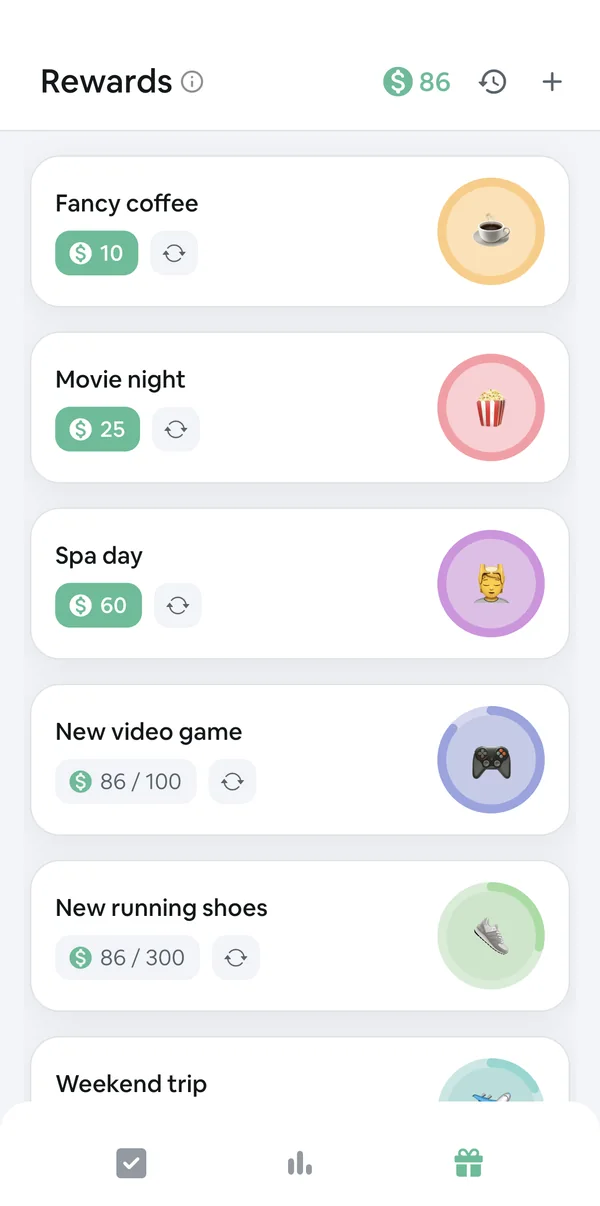
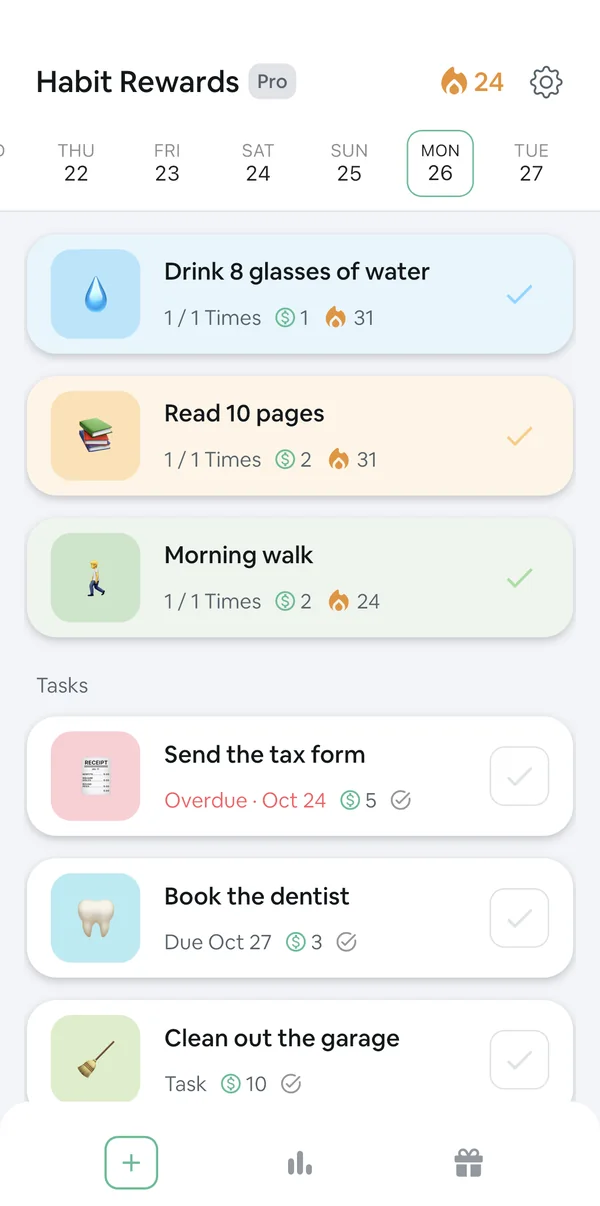
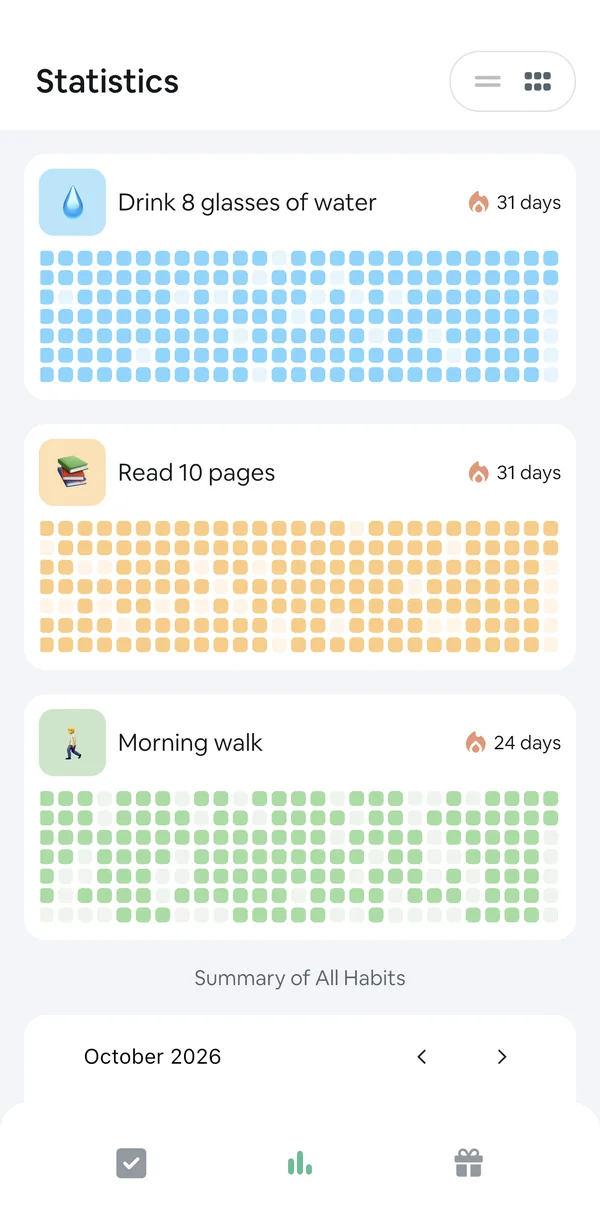
Habit Rewards turns each of these into a habit that rewards you. Add the daily habit, set a reminder, and each check-in earns 1, 4, 8 or 16 coins depending on how hard you rate it. You spend the coins on rewards you write and price yourself, so a month of morning walks can buy the new running shoes. One-off goals, like booking a check-up, can be tasks that earn coins too.
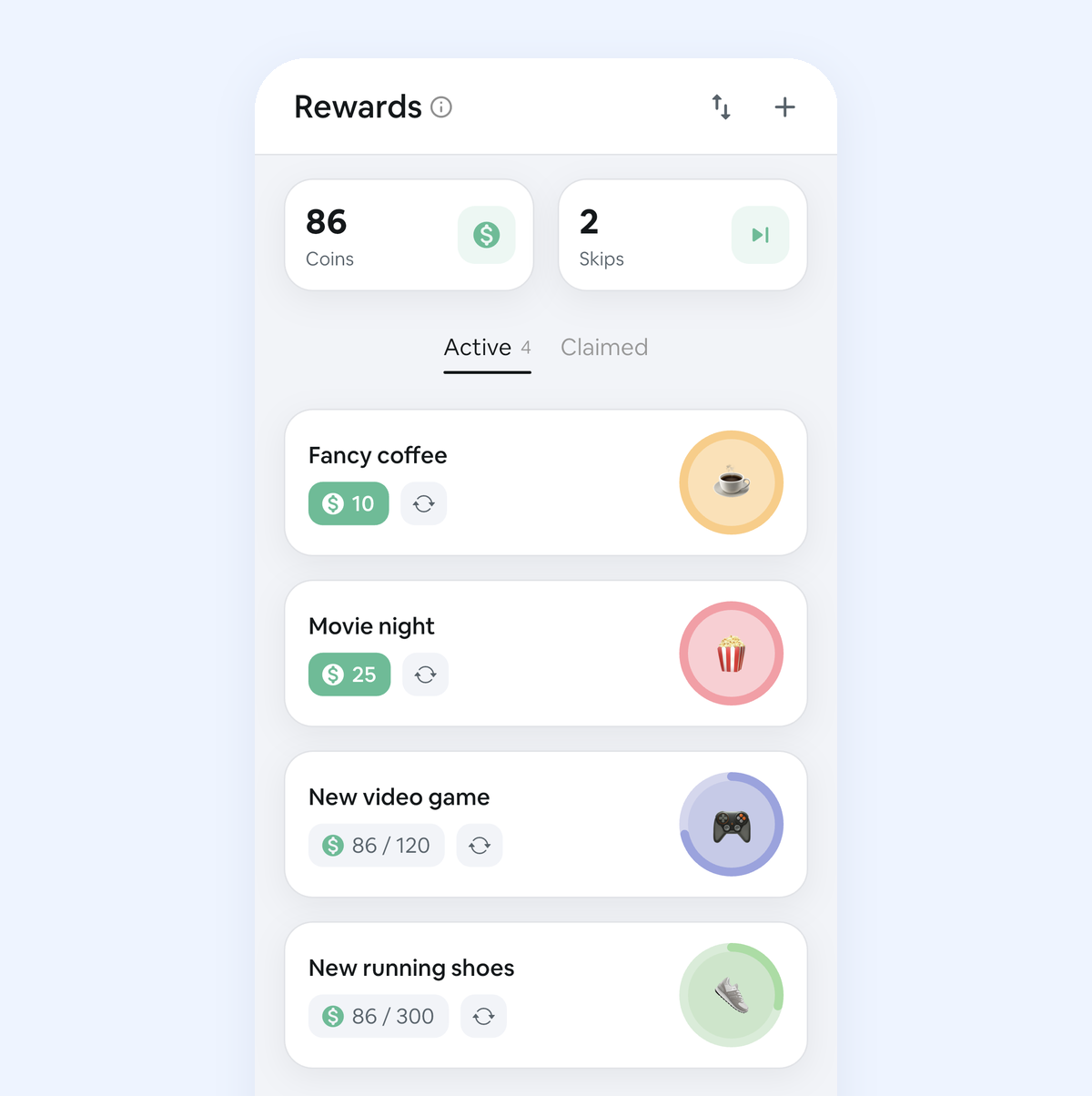
It’s free for up to three habits on iPhone and Android, which is exactly enough for three resolutions.
Try Habit Rewards: the habit tracker that rewards you
Every habit you check off earns you coins. Put a coin price on the treats you want and claim them once you've earned them. Free for three habits, on iPhone and Android.
 On a computer? Scan it with your phone to open the App Store or Google Play.

Using Notion?
Start with our free Notion habit tracker and formulas, or get the aesthetic Notion Habit Tracker template with heatmaps and streaks.
More articles you may be interested in:
- Free Notion Habit Tracker Templates (and How to Build Your Own)
- Trigger, Behavior, Reward: The Habit Loop Explained With Examples
- Advent Calendar Challenge Ideas 2026: 24 Small Habits (Free Printable)
- Holiday Run Streak 2026: Rules, Dates and a 37-Day Tracker
- Rewards for Achieving Goals: 80 Ideas, Sized to the Goal
- How to Reward Yourself Without Spending Money (and for Saving It)
Rather track it on your phone? In Habit Rewards every check-off earns coins, and you spend them on rewards you set yourself. Free on iPhone and Android for up to 3 habits.
Get the appFree habit tools and printables
Free, in your browser, no sign-up.