
A January challenge is one habit you keep every day from January 1 to 31: a daily walk, no alcohol, 10 pages of reading, a no-spend month. Give yours the best chance: keep it small, give it a minimum version for bad days, and pick the rewards before you start. Below: 40 ideas for adults, the January 2027 calendar, and how to set a challenge up so it gets past the second week.
If your challenge is no alcohol: if you have ever had shaking hands, sweating or fits, or seen things that are not there, while sobering up, or think you may be dependent on alcohol, do not stop suddenly: withdrawal can be life-threatening. Talk to your GP, doctor or a local alcohol service first; they can help you cut down safely. If you drink most days, ask your GP or doctor before you start, even if you have never had withdrawal symptoms. Help: in the UK, Drinkline is free on 0300 123 1110 (weekdays 9am to 8pm, weekends 11am to 4pm); in the US, the SAMHSA National Helpline is free on 1-800-662-4357. If you have a seizure, hallucinations, confusion or severe shaking after stopping or cutting down, call 999 in the UK, 911 in the US or Canada, 000 in Australia, or your local emergency number. This page is not medical advice.
Last updated: November 26, 2026.
Key takeaways
- Pick one challenge for January, not three. One habit kept for 31 days is a finished challenge; three dropped by the 10th are not.
- Write two versions before you start: the full one for normal days and a minimum for sick, late or travel days. A minimum day still counts.
- Choose your rewards in advance, for day 10, day 20 and day 31, so each part of the month ends in something you want.
- January 1, 2027 is a Friday and New Year's Day, so the challenge starts with a long weekend and meets its first full work week on Monday, January 4 (in Scotland the 4th is a bank holiday too).
- Missing one day doesn't end a challenge: in the UCL habit study below, a single missed day made no lasting difference. "Never miss twice" is our rule of thumb, not a study finding: after a miss, do the minimum the next day.
- A 31-day challenge is a start, not a finished habit: in one UCL study of 96 volunteers, a daily habit took a median of 66 days to feel as automatic as it would get (by their own ratings), and exercise habits took longer.
January 2027 at a glance
- Friday, January 1: day 1, New Year’s Day. Set the challenge up on New Year’s Eve so day 1 is just doing it.
- Saturday and Sunday, January 2 and 3: days 2 and 3 fall on the weekend. Do the habit at the same time you will on weekdays.
- Monday, January 4: the first full work week for many people. Routines change here, so this is the week your minimum version earns its keep.
- Friday, January 8: day 8, the second Friday of January, sometimes called “Quitter’s Day”. In January 2018 Strava, the exercise app, said that across 31.5 million January activities the second Friday showed the biggest drop in activity once weekly patterns were set aside. It is one app’s data, not a study, but the second week is where many challenges wobble.
- Sunday, January 10: day 10, your first reward.
- Wednesday, January 20: day 20, your second reward.
- Sunday, January 31: day 31, the big one. February starts on Monday.
A 30-day challenge that starts on January 1 ends on Saturday, January 30. January has 31 days, so most January challenges simply run the whole month.
How do you set up a January challenge that lasts?
- Choose one habit. Pick the one that would make the biggest difference if it were still going in March. Everything else can wait for February.
- Write the full and the minimum version. “A 30-minute walk” on normal days, “a 10-minute walk” on bad ones. Decide now, while you’re motivated, what counts on the worst day of the month.
- Pick three rewards now. Something small on day 10, something better on day 20 and a real treat on day 31. Rewards you chose in advance give each part of the month a finish line. Need ideas? See 70 ways to reward yourself.
- Put the tracker where you’ll see it. A printed calendar on the fridge or an app on your home screen. Tick the day off as soon as you’ve done the habit, not at night from memory.
- Never miss twice. If you miss a day, the challenge isn’t over. Do the minimum the next day and carry on.
40 January challenge ideas for adults
New to exercise, back after a long break, or living with a heart, lung or joint condition or another medical condition? Ask your doctor which of the fitness ideas suit you, and start at the easy end. Pregnant? Ask your midwife or doctor first: the NHS advises against starting a new vigorous activity such as running in pregnancy. Whatever your starting point, stop if something doesn’t feel right.
Fitness and movement (easiest first)
- A 10-minute walk every day, outside in daylight if you can
- 7,000 steps a day, or 10,000 if you already walk a lot
- 10 minutes of stretching or yoga a day
- 31 days of squats: 10 on day 1, one more each day (40 on day 31)
- A plank every day: 20 seconds to start, a little longer each week
- Take the stairs every time
- Move every day, any way you like: a walk, a run, a class. That’s the idea behind the UK’s RED January
- Two strength workouts a week, a walk on the other days
- Start running with a beginner plan such as the NHS’s free Couch to 5K: three runs a week for nine weeks, so January covers about the first four and a half weeks
Food and drink
Food rules are not for everyone. If you have had an eating disorder, pick from another list or ask your care team first. If you’re pregnant, breastfeeding or under 18 and want to try vegan, plan it with your doctor or midwife (the NHS says a vitamin B12 supplement may be needed). If you have diabetes, a no-sugar rule never applies to treating a low.
- No alcohol for the month (Dry January). Not right for everyone: read the alcohol note under the introduction first. Our Dry January tracker counts the days and estimates the money you don’t spend on drinks
- Eat vegan for the month, as in Veganuary
- No added sugar on weekdays
- Cook dinner at home five nights a week
- A portion of vegetables with lunch and with dinner
- A glass of water before your first coffee
- No caffeine after 2 p.m.
Sleep and mind
- The same wake-up time every day, weekends included (how to wake up early)
- Phone on charge away from the bed at night
- 10 minutes of meditation or quiet breathing
- Three lines in a journal before bed
- One line of gratitude a day (gratitude journal)
- No social media before noon
- Read 10 pages a day: about 310 pages by the 31st, about the length of a typical novel (reading tracker)
- One lesson a day in a language app or an online course
Money
- No Spend January: essentials only (rules and a 2027 calendar)
- Write down every purchase
- A packed lunch on workdays
- A day-by-day savings challenge: $1 or £1 on January 1, 2 on the 2nd, up to 31 on the 31st, 496 in all
- Cancel or pause one subscription a week
- A 24-hour wait before any online purchase
Home
- Declutter one thing a day: 31 things out by the end of the month
- A 10-minute tidy before bed
- Make your bed every morning
- One new recipe a week
- A clear sink before you go to sleep
People
- Message one friend or family member a day
- One phone-free meal a day
- A handwritten thank-you note every week
- One kind thing a day, however small
- A call to someone you love every Sunday
Which January challenge should you pick?
Start from the resolution you made, then pick the challenge that turns it into something you can tick off today:
| If your resolution is… | Try this for January |
|---|---|
| Get fit | A 10-minute walk every day, or 31 days of squats |
| Eat better | Vegetables with lunch and dinner, or cook at home five nights a week |
| Drink less | Dry January (if you drink most days, read the alcohol note under the introduction first) |
| Save money | No Spend January, or the $1-a-day savings challenge |
| Read more | 10 pages a day |
| Sleep better | The same wake-up time every day |
| Less phone | Phone on charge away from the bed at night |
| Less stress | 10 minutes of meditation or a daily walk |
Still choosing a resolution? Here are 65 realistic New Year’s resolutions, each with the daily habit to track.
What happens after January 31?
Keep going. In a study by Phillippa Lally and colleagues at UCL, 96 volunteers each repeated one eating, drinking or exercise habit every day for 12 weeks and rated how automatic it felt. For the 39 whose ratings followed a clear curve, it took a median of 66 days to level off, from 18 to an estimated 254 days, and the exercise habits took longest (a median of 91 days, in a small group) (how long it takes to form a habit). So on day 31 a habit is usually still getting easier. Two ways to carry it on:
- Run it to day 66. From January 1, day 66 is Sunday, March 7. The 66 day challenge has the rules and a printable.
- Keep it in the yearly tracker. The 2027 yearly habit tracker gives the habit a page for all 365 days, with a monthly goal and reward.
Free January printables
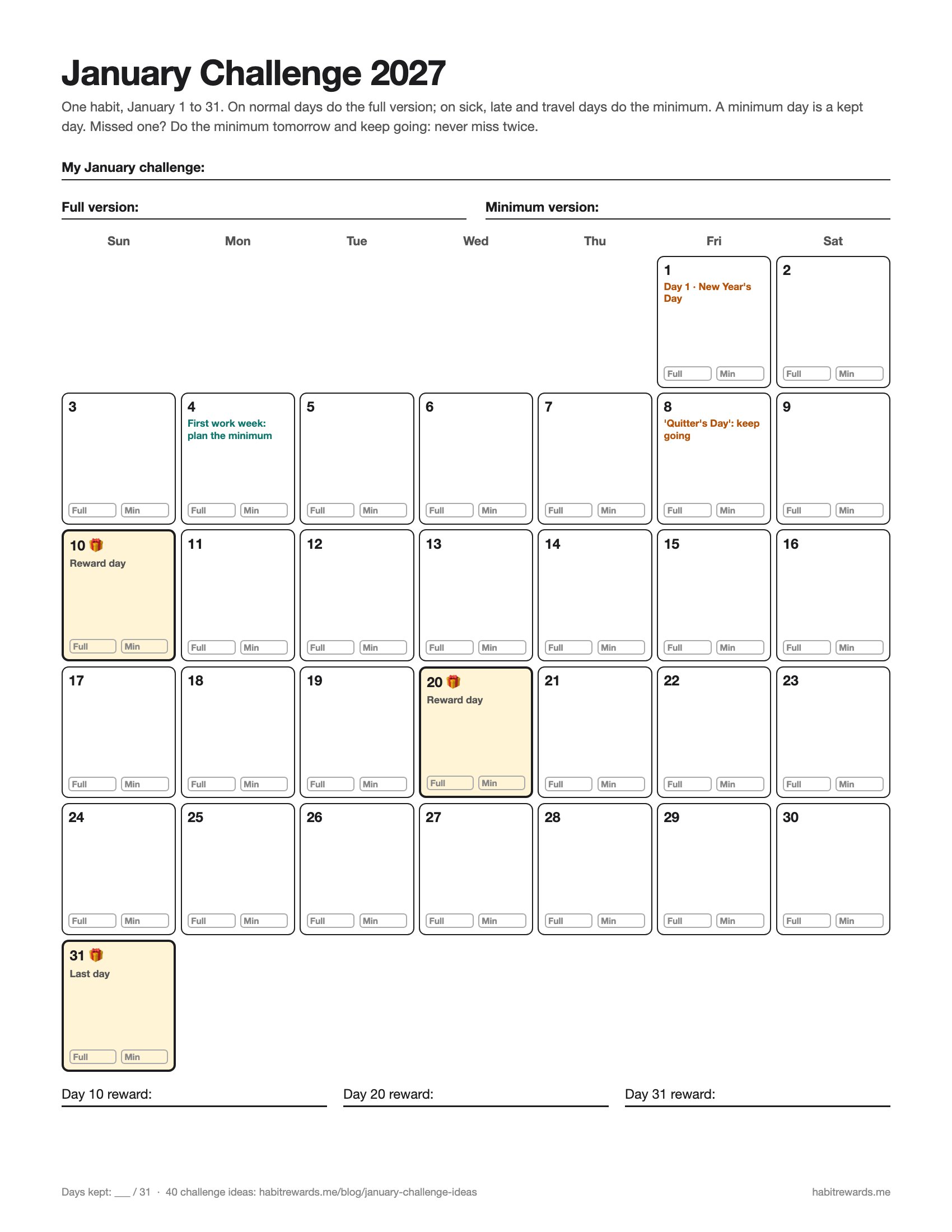
- January Challenge 2027 calendar (PDF, US Letter, prints on A4): one page with your challenge, its full and minimum versions, a Full and a Min box for every day from Friday, January 1 to Sunday, January 31, and reward days 10, 20 and 31.
- Printable habit tracker for January 2027: a monthly grid for several habits, each with a goal and a reward.
- 30-day challenge tracker: a printable streak calendar with rewards on days 7, 14, 21 and 30.
- No Spend January 2027 calendar and the Dry January tracker for those two challenges.
Track it in Habit Rewards
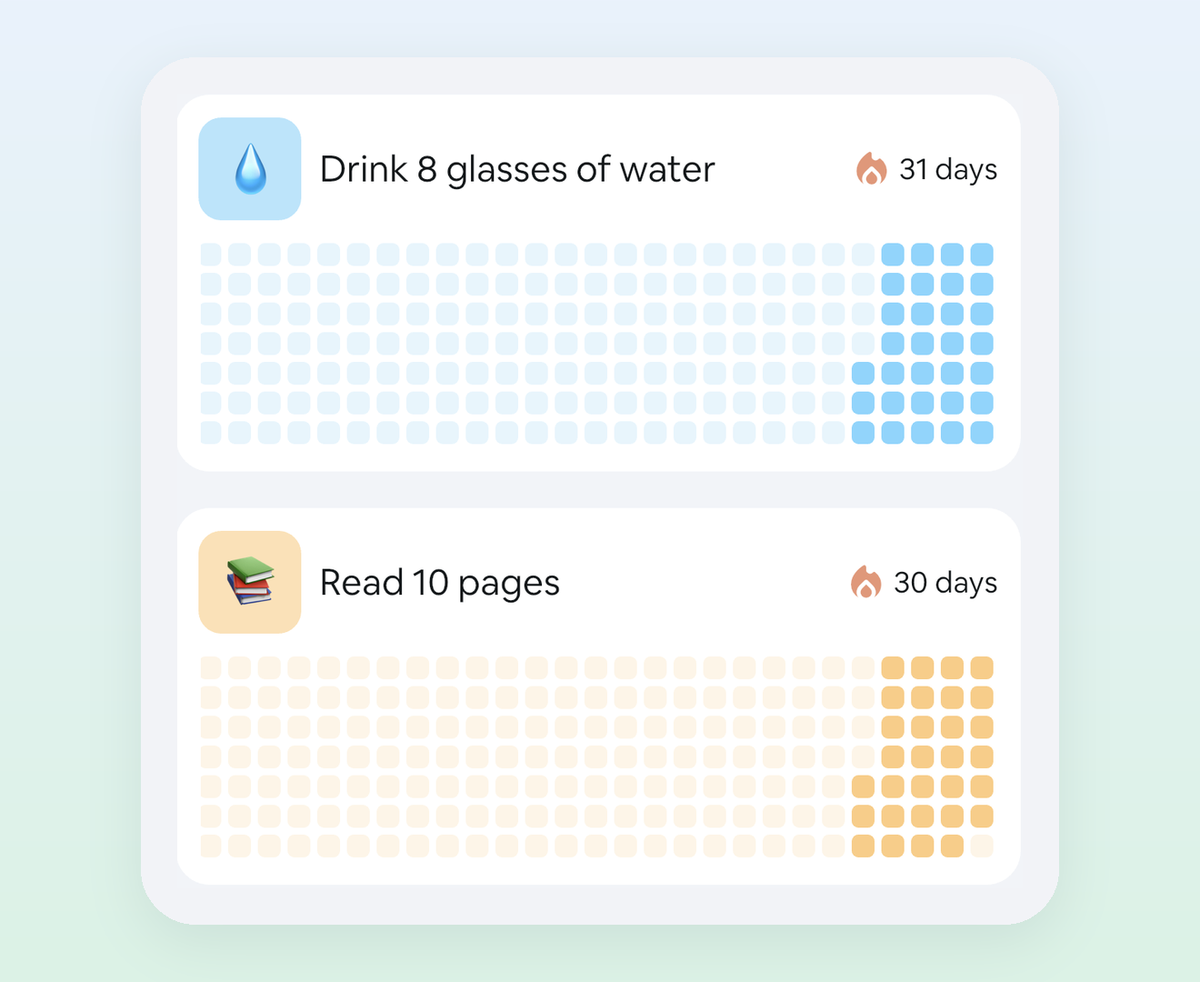
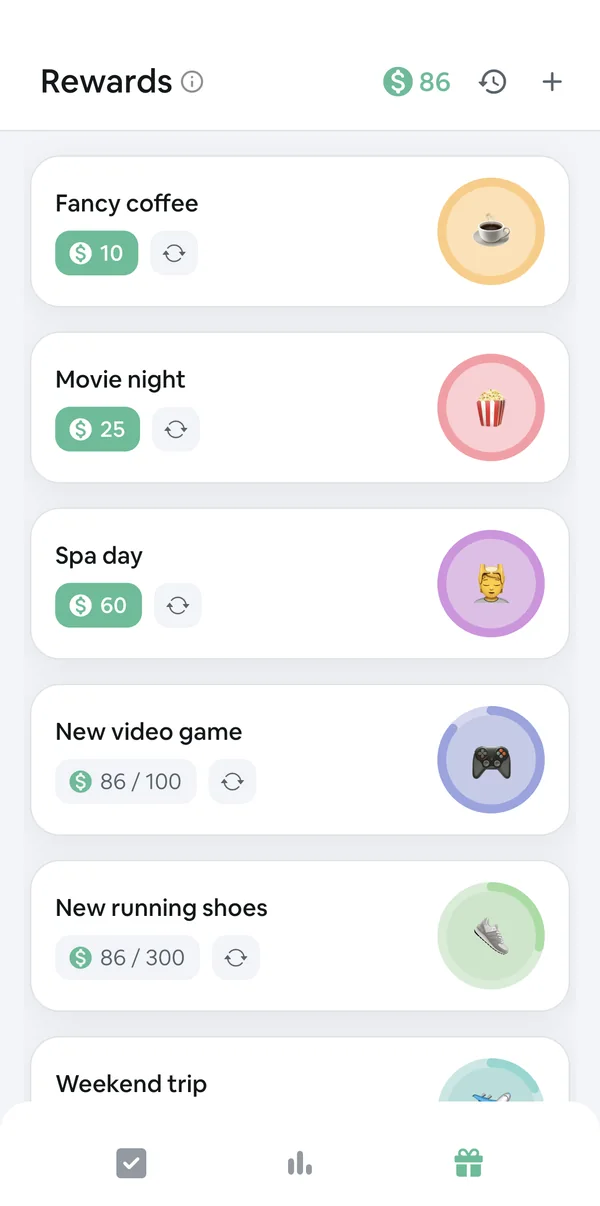
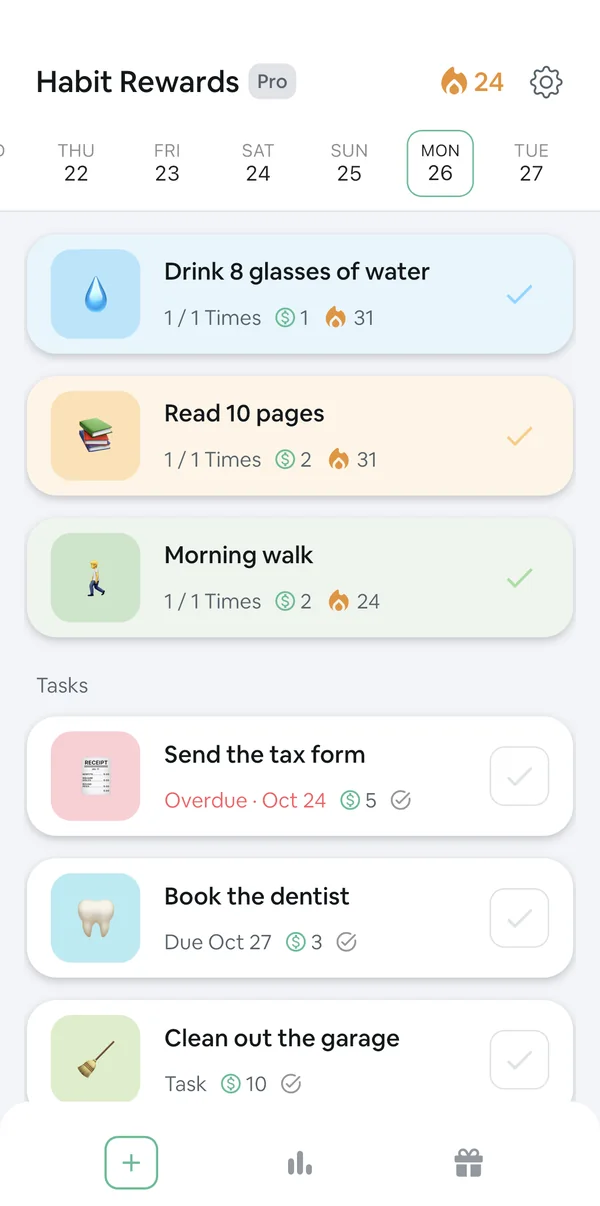
Our app, Habit Rewards, turns a January challenge into a game you can win every day: add the challenge as a daily habit, check it off to earn coins (1, 4, 8 or 16 by how hard you rate it, or any amount you set), and spend them on rewards you write and price yourself. Price your day-10, day-20 and day-31 rewards so the coins cover each one by its day: a 4-coin habit earns 40 coins by day 10 and 124 by day 31. It keeps your streak (a Skip protects it on a day you can’t make: everyone starts with one, and more come with Pro), reminds you at the time you choose and puts the habit on your home screen with a widget. It’s free for three habits and three rewards on iPhone and Android.
FAQ
What is a January challenge?
A January challenge is one habit you do every day from January 1 to 31, such as a daily walk, no alcohol, 10 pages of reading or a no-spend month. It’s 31 days long, so it starts the year with a finished streak.
What are good January challenges for adults?
Small ones you can keep on a busy day: a 10-minute walk, 7,000 steps, 10 pages of reading, the same wake-up time every day, a packed lunch on workdays, Dry January or No Spend January. If you drink most days or have ever had withdrawal symptoms, talk to a doctor before you stop drinking: stopping suddenly can be life-threatening. Pick one, give it a minimum version for bad days and choose your rewards for days 10, 20 and 31 before you start.
What is a good January fitness challenge for beginners?
A 10-minute walk every day, 10 minutes of stretching, or 31 days of squats that start at 10 and add one a day. If you’d like to start running, the NHS’s free Couch to 5K plan has three runs a week for nine weeks. If you’ve been inactive for a while, have a medical condition or are pregnant, ask your doctor or midwife first.
Is a January challenge 30 or 31 days?
Most January challenges run the whole month, 31 days. A 30-day challenge that starts on January 1, 2027 ends on Saturday, January 30.
What if I miss a day of my January challenge?
Do the minimum version the next day and keep going. In one habit study, a single missed day made no lasting difference to how automatic the habit became. Our rule of thumb: never miss two days in a row.
Is there a printable January challenge calendar?
Yes. Our free January Challenge 2027 calendar is a one-page PDF with a Full and a Min box for every day from January 1 to 31 and reward days 10, 20 and 31. For several habits at once, the printable habit tracker for January 2027 gives each one a goal and a reward.
Sources
- Lally, P., van Jaarsveld, C., Potts, H. and Wardle, J. (2010). “How are habits formed: Modelling habit formation in the real world.” European Journal of Social Psychology, 40(6), 998–1009. doi.org/10.1002/ejsp.674
- NHS, Couch to 5K: week by week
- NHS, Alcohol support and Alcohol use disorder (the alcohol note under the introduction)
- Alcohol Change UK, Dry January
- USAGov, Substance abuse and addiction (the SAMHSA National Helpline)
- NHS, Physical activity guidelines for adults aged 19 to 64, Exercise in pregnancy and The vegan diet
Health advice checked on November 26, 2026 against the sources above. This page is not medical advice. Next check by January 4, 2027.
Try Habit Rewards: the habit tracker that rewards you
Every habit you check off earns you coins. Put a coin price on the treats you want and claim them once you've earned them. Free for three habits and three rewards, on iPhone and Android.
 On a computer? Scan it with your phone to open the App Store or Google Play.
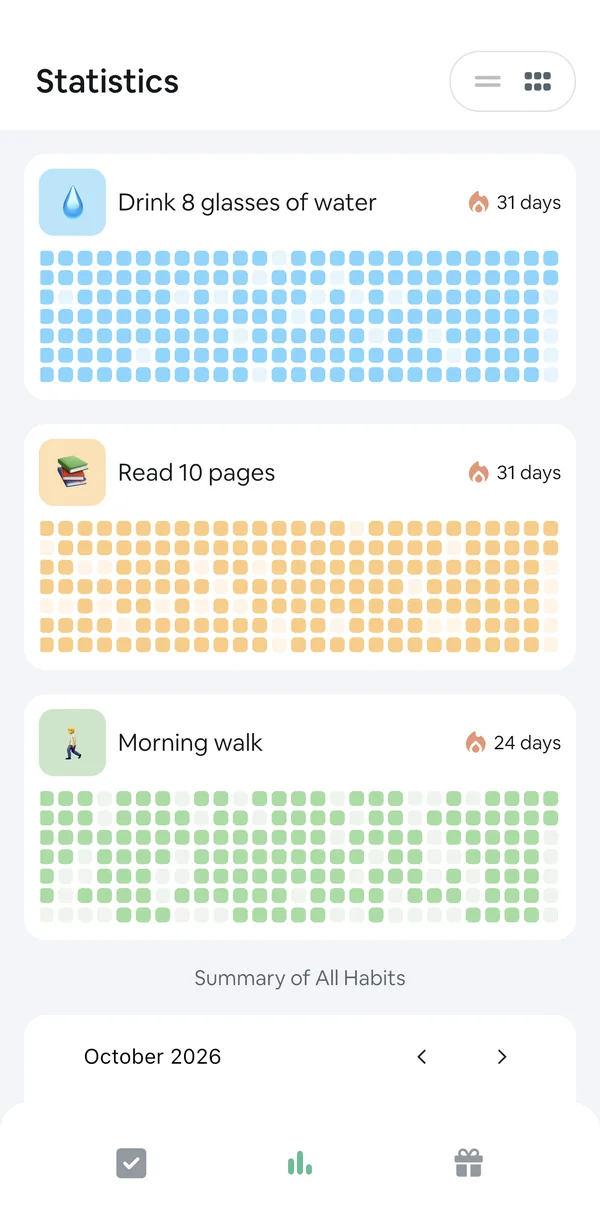

Using Notion?
Start with our free Notion habit tracker and formulas, or get the aesthetic Notion Habit Tracker template with heatmaps and streaks.
More articles you may be interested in:
- Free Notion Habit Tracker Templates (and How to Build Your Own)
- Trigger, Behavior, Reward: The Habit Loop Explained With Examples
- Best Habit Tracker App for Android: 10 Compared (2026)
- Best Habit Tracker App for iPhone: 10 Compared (2026)
- Advent Calendar Challenge Ideas 2026: 24 Small Habits (Free Printable)
- Holiday Run Streak 2026: Rules, Dates and a 37-Day Tracker
Rather track it on your phone? In Habit Rewards every check-off earns coins, and you spend them on rewards you set yourself. Free on iPhone and Android for 3 habits and 3 rewards.
Get the appFree habit tools and printables
Free, in your browser, no sign-up.