
Most attempts to wake up early fail the same way. You set the alarm an hour earlier, drag yourself up for three days on willpower, sleep through it on day four, and decide you’re not a morning person.
The early part is rarely the problem. The jump is too big, the night before doesn’t change, and nothing about the early morning is worth getting up for yet. Here’s a version that fixes all three.
1. Work back from your sleep, not from your ambition
The CDC recommends at least 7 hours of sleep a night for adults. So the real question isn’t “can I get up at 6?” but “can I be asleep by 11 pm?” If the answer is no, a 6:00 alarm just makes you tired.
| Wake-up time | Asleep by (7.5 hours) | Start winding down |
|---|---|---|
| 5:00 am | 9:30 pm | 9:00 pm |
| 5:30 am | 10:00 pm | 9:30 pm |
| 6:00 am | 10:30 pm | 10:00 pm |
| 6:30 am | 11:00 pm | 10:30 pm |
| 7:00 am | 11:30 pm | 11:00 pm |
Pick the wake-up time you want, and read across. That bedtime is the habit you’re really building.
2. Move the alarm 15 minutes at a time
Going from 8:00 to 6:00 overnight means two hours of lost sleep on day one. Instead, move your alarm 15 minutes earlier, keep it there for three or four days, then move it again. Eight steps get you from 8:00 to 6:00 in about a month, and your bedtime moves with it without much of a fight.
If you’re a genuine night owl, a smaller target that you keep beats a heroic one you don’t. 7:00 every day is better than 5:00 twice a week.
3. Keep the same time on weekends
Sleeping in until 10:00 on Saturday is like flying two time zones west and back every weekend. Monday morning feels terrible, and you blame the early alarm. Keep your weekend wake-up within an hour of your weekday one, at least for the first month. You can nap if you need to.
4. Fix the night before
Most early mornings are won or lost the evening before:
- Set a wind-down alarm 30 minutes before your target bedtime. That’s the alarm that matters.
- Phone on charge outside the bedroom. Then you have to get up to turn the alarm off, and you’re not scrolling at midnight.
- Lay out the morning: clothes, gym bag, the coffee ready to go. Fewer decisions at 6:00.
- Cut off caffeine by early afternoon. It stays in your system for hours.
Our free morning and night routine checklist maker works out the times for you: put in your steps, and it shows when to start.
5. Get up the moment the alarm goes off
The snooze button turns getting up into a decision you make five times. Make it no decision at all: alarm across the room, feet on the floor, curtains open. Bright light soon after waking is one of the strongest signals your body clock has, so open the curtains or step outside for a few minutes, even on grey days.
6. Give the early hour a job you want
An early alarm with nothing behind it is easy to sleep through. Put something there you actually look forward to: coffee in silence, the book you never have time for, a walk, the side project. If the first thing you do at 6:00 is work email, your brain will learn to avoid 6:00.
Then stack the new habits onto getting up: “after I open the curtains, I drink a glass of water; after the water, I read ten pages”. More in habit stacking examples.
7. Reward the first weeks, not just the result
For the first few weeks, waking up early costs you something every morning and pays back later. That gap is where most people quit. Close it with a small reward for each morning you get up on time, and a bigger one when you’ve kept it up for two weeks. A good coffee out on day 7, a new book at day 14, something bigger at day 30.
Don’t expect it to feel automatic after 21 days. In a well-known 2010 study, simple daily habits took a median of 66 days to feel automatic, and missing one day didn’t reset the progress. More in how long it takes to form a habit.
Track it with Habit Rewards
Habit Rewards is a habit tracker that pays you coins for each habit you check off. Add “Up by 6:30” as a daily habit, give it a high coin value while it’s hard, and set a reminder for your wind-down time. Write your rewards and give each a coin price; when your balance covers one, it’s yours. If you’re ill or travelling, a Skip keeps your streak alive.
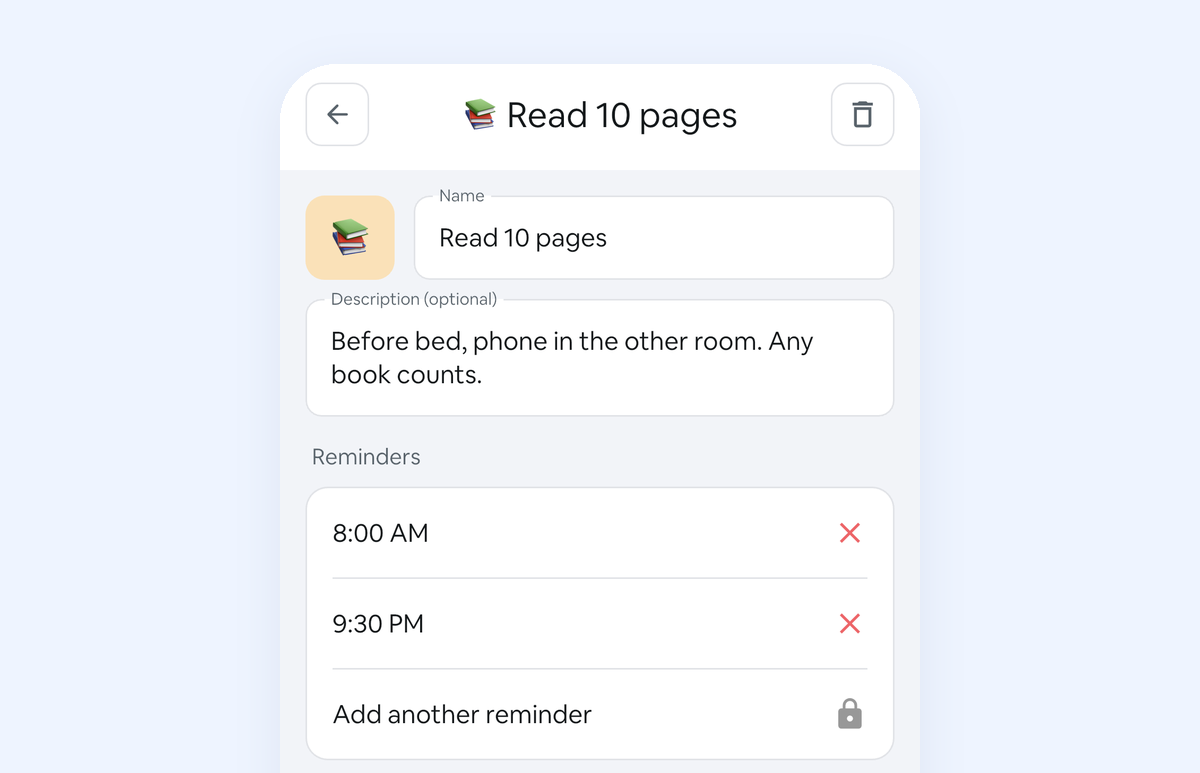
It’s free for three habits on iPhone and Android.
FAQ
How do I wake up early without feeling tired? Get enough sleep first: work back at least 7 hours from your alarm and go to bed then. Move the alarm 15 minutes at a time, keep the same time on weekends, and get bright light soon after you get up.
How long does it take to become a morning person? Moving your wake time takes a few weeks at 15 minutes every few days. Making it feel automatic takes longer: in research on habit formation, simple daily habits took around two months on average.
Is it bad to wake up at 5am? Not if you’re asleep by about 9:30 pm. Waking at 5:00 on 5 hours of sleep is the problem, not the hour itself. If your life doesn’t need 5:00, a later time you can keep is better.
How do I wake up early to study? Same plan, plus one thing: decide the night before exactly what you’ll study first and leave the book open on the desk. Reward the session, not just the alarm. More in how to reward yourself for studying.
✅ Try Habit Rewards: the habit tracker that pays you
Every habit pays coins by how hard it is (1, 4, 8 or 16). Write your own reward list, put a coin price on each treat, and claim it once you've earned it.
- Daily, weekly and monthly habits, plus one-off tasks that pay coins
- Reminders, streaks and home-screen widgets
- A 10-coin Skip for the days you can't
- Free for three habits, on iPhone and Android

On a computer? Scan the code with your phone (it opens the App Store or Google Play), or get it on the App Store.

Using Notion?
Start with our free Notion habit tracker and formulas, or get the aesthetic Notion Habit Tracker template with heatmaps and streaks.
More articles you may be interested in:
- Free Notion Habit Tracker Templates (and How to Build Your Own)
- Trigger, Behavior, Reward: The Habit Loop Explained With Examples
- Reward Jar Ideas for Adults: How to Set One Up (+ 40 Slips)
- 50 Realistic New Year's Resolutions for 2027 (and the Daily Habit for Each)
- New Year's Resolution Tracker: How to Keep Track of Your 2027 Resolutions
- How to Reward Yourself for Weight Loss: 50 Non-Food Rewards
Free habit tools and printables
Free, in your browser, no sign-up.