
Losing weight pays out slowly and unevenly. You can do everything right for a week and see the scale go up, because water, salt and a late dinner can move it a pound or two from one day to the next. If the scale is your only payday, some weeks you get paid nothing for good work.
Rewards fix that, as long as they pay for the right thing. Here’s a system that does.
Reward the habits, not the pounds
You can’t decide what the scale says tomorrow. You can decide to walk, cook dinner at home and be in bed by eleven. Those are the things to pay for: they’re in your control, they happen every day, and they’re what moves the scale over months.
Weight still gets rewards, but as milestone bonuses on top (more below). The everyday currency is “I did the habit”.
There’s evidence that paying works. In a 2008 study in JAMA (Volpp and colleagues), 57 adults with obesity were set a goal of a pound a week. Over 16 weeks, the two groups paid cash incentives lost about 13–14 lb on average, against about 4 lb for the group with only monthly weigh-ins. When the payments stopped, much of the difference faded. So two lessons: rewards help, and the reward system should keep running after you hit your goal, paying for the habits that keep the weight off.
A points scale for weight-loss habits
Give each habit a price, so the hard ones pay more than the easy ones:
- 1 point: small wins. Log what you ate, drink water with every meal, weigh in if that’s part of your plan.
- 4 points: a 30-minute walk, a home-cooked dinner, a packed lunch instead of takeout, lights out on time.
- 8 points: a workout, a whole day on your eating plan, an evening without snacking after dinner.
- 16 points: the rare big ones: a full week on plan, a long hike, saying no to the office cake every day of a birthday week.
Then price your rewards: a small treat at 10–20 points, an evening out at 40–60, new clothes or gear at a few hundred. A normal good day pays 10–15 points, so something small is always a day or two away.
Quitting something, like late-night snacks or soda? Count the days you go without, and pay a bonus at day 7, 30 and 100. Our guide to rewarding yourself for quitting goes deeper.
Milestone rewards
Points cover the daily rhythm. Milestones mark how far you’ve come. Mix habit milestones (fully in your control) with a few weight ones:
| Milestone | Example reward |
|---|---|
| First 7 days on plan | A new water bottle and a podcast you’ve been saving |
| 20 walks or workouts | Good walking shoes or running socks |
| First 5 lb (or 2 kg) | A massage |
| 5% of your starting weight | A piece of clothing in your new size |
| 50 home-cooked dinners | A good knife or a cookbook you’ll use |
| 10% of your starting weight | A day out you’ve wanted for a while |
| Goal weight | Something big you chose on day one: a trip, a new wardrobe piece, a race entry |
| Goal weight, kept 3 months | A second big reward. Keeping it off is the real finish line |
Losing 5% of your weight is a common first target because health guidelines, like the CDC’s, note benefits from losing even 5–10%. Set the numbers with your doctor if you have a medical plan.
How often should you reward yourself?
Small rewards every few days, a medium one every week or two, a big one every month or so. Early on, keep them close together: the first two weeks are when most people quit, and that’s when the scale is noisiest. Once the habits run on their own, you can space rewards out.
50 non-food rewards for weight loss
Small (every few days)
- A long bath or hot shower with no rush
- An episode of a show you only watch on good days
- A new playlist for walks
- A podcast episode you’ve saved
- Fresh flowers
- A coffee from a place you like (black, or how you planned it)
- Twenty guilt-free minutes on your phone
- A face mask or nice hand cream
- An early night with a book
- A new app or game for your phone
- A nap on a weekend afternoon
- Nail polish or a manicure kit
- A magazine
- A candle you like
- Calling a friend with nowhere else to be
Medium (weekly)
- A cinema trip
- A new book
- A free evening with nothing planned
- A guilt-free gaming night
- A lie-in
- A class you’ve never tried: dance, climbing, pottery
- New workout clothes you actually want to wear
- A plant for your desk
- A museum or gallery visit
- A new album
- A day trip somewhere you can walk
- A pedicure
- A new kitchen gadget that makes cooking at home easier
- Concert or comedy tickets
- A meal-prep container set you like
Big (milestones)
- A massage
- A haircut or new style
- Clothes in your new size
- Walking or running shoes, properly fitted
- A fitness watch
- A spa day
- A weekend away with a hike in it
- A professional photo shoot
- A bike, or a service for the one you have
- A few sessions with a personal trainer
- A good knife or cast-iron pan
- A race entry: a 5K, a charity walk
- A course in something you’ve wanted to learn
- Noise-cancelling headphones
- A day of skiing, surfing or kayaking
- A new piece of jewellery or a watch
- A trip built around walking: a city break, a coastal path
- A wardrobe clear-out and a shopping day to replace it
- Event tickets you’d normally skip because of the price
- A donation to a cause you care about, in your own honour
For more ideas, see 70 ways to reward yourself, or write your own list with our free dopamine menu builder.
What about food rewards?
They’re not banned. A dinner out at a favourite place is a fine milestone reward. The trouble is making food the main currency: if every good day pays out in dessert, the system pays you to undo the work. Keep food as one item on the menu, priced like any other reward, and plan it in rather than deciding on the spot.
A weight-loss reward chart on paper
If you’d rather tick boxes on the fridge, our free printable habit tracker gives each habit a row for the month plus a goal and a reward, and the 30-day challenge tracker prints 30 dated boxes with rewards on day 7, 14, 21 and 30. Moving more is the main habit? Here’s how to reward yourself for working out.
Mistakes that break it
- Paying only for the scale. A flat week takes away every reward right when you need one.
- Rewards that undo the work. A binge as the prize for a good week sends you backwards. Pick rewards that sit next to the goal.
- Taking rewards on credit. “I’ll earn it tomorrow” ends the system. Fixed prices, paid after.
- Stopping at goal weight. The rewards were holding the habits up. Keep paying for them, at a slower pace.
Do it in an app
Habit Rewards is a habit tracker built around this kind of points system. Add your habits (a daily walk, cooking at home, lights out by eleven) and pick each one’s difficulty: each check-in pays 1, 4, 8 or 16 coins. Your rewards each have a coin price, and you claim one when your balance covers it. The app keeps your streaks and your balance for you.
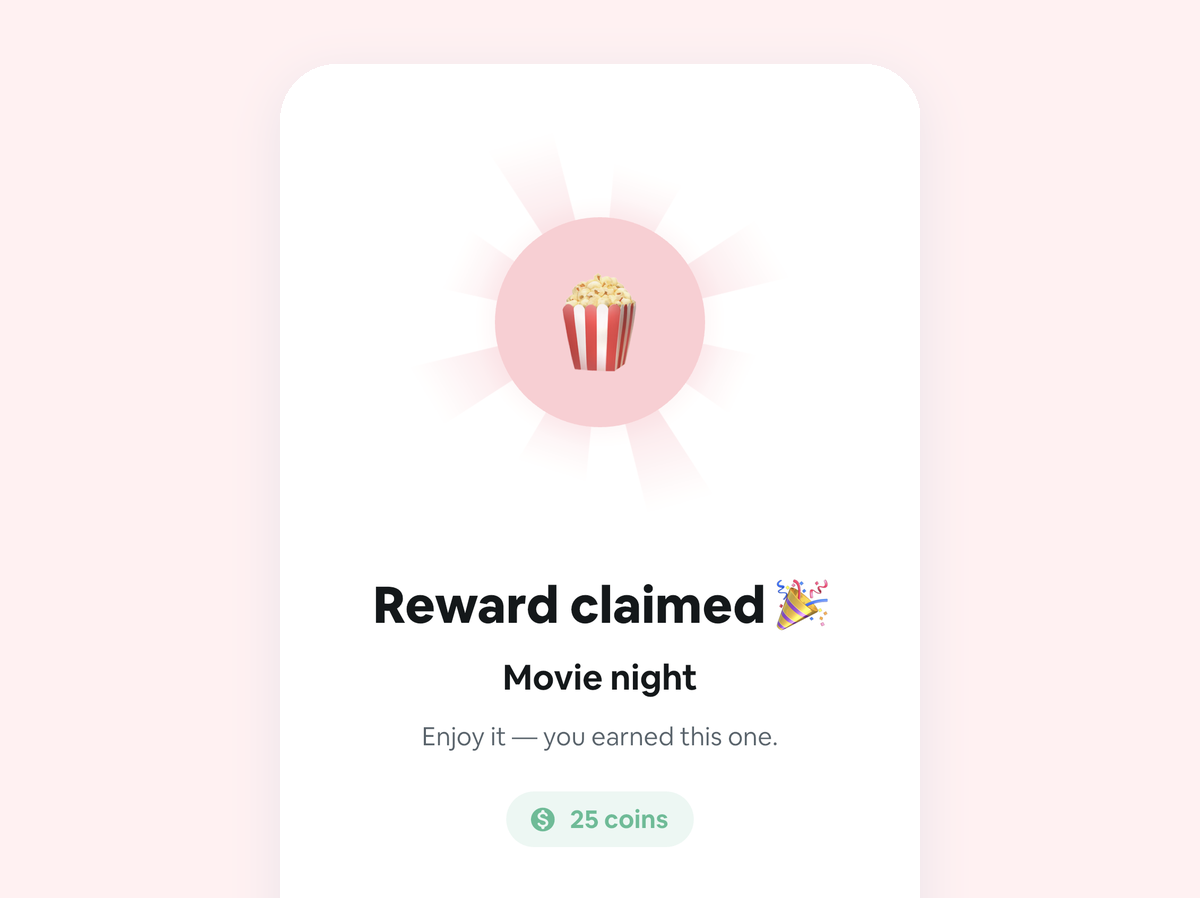
It’s free for up to three habits on iPhone and Android. This article is general information, not medical advice: talk to your doctor before starting a weight-loss plan.
✅ Try Habit Rewards: the habit tracker that pays you
Every habit pays coins by how hard it is (1, 4, 8 or 16). Write your own reward list, put a coin price on each treat, and claim it once you've earned it.
- Daily, weekly and monthly habits, plus one-off tasks that pay coins
- Reminders, streaks and home-screen widgets
- A 10-coin Skip for the days you can't
- Free for three habits, on iPhone and Android
On a computer? Scan the code with your phone (it opens the App Store or Google Play), or get it on the App Store.

Using Notion?
Start with our free Notion habit tracker and formulas, or get the aesthetic Notion Habit Tracker template with heatmaps and streaks.
More articles you may be interested in:
- Free Notion Habit Tracker Templates (and How to Build Your Own)
- Trigger, Behavior, Reward: The Habit Loop Explained With Examples
- How to Reward Yourself for Reading More
- How to Reward Yourself for Cleaning the House
- Gamified To-Do List Apps: 6 That Reward You for Finishing Tasks
- Tiimo Alternatives: 4 ADHD-Friendly Apps, Picked by What You Need
Free habit tools and printables
Free, in your browser, no sign-up.