
If you’ve read Atomic Habits, you know the framework: to build a habit, make it obvious, attractive, easy and satisfying. To break one, flip each law: make it invisible, unattractive, difficult and unsatisfying. The book is full of tactics for each, like habit stacking, the two-minute rule and temptation bundling. Turning them into a daily routine is where an app helps.
There is an official app: Atoms. Below is what it does, and then four other apps that each lean hard on one of the four laws. One of them is ours, Habit Rewards; we’ve tried to describe the others fairly.
| Law | What the book suggests | Try |
|---|---|---|
| All four, in the book’s own words | Lessons plus guided habits | Atoms |
| 1. Make it obvious | Decide when and where | Structured |
| 3. Make it easy | Habit stacking, the two-minute rule | Routinery |
| 4. Make it satisfying | Track it, don’t break the chain | HabitKit |
| 2 and 4. Attractive and satisfying | Temptation bundling, an immediate reward | Habit Rewards |
Atoms: the official Atomic Habits app
Atoms is built on the book’s principles and James Clear’s own content. It’s a habit tracker with bite-sized lessons on top. When you create a habit, it guides you to start from the kind of person you want to become, to start at a size that suits you, and to commit to a time and a place. Then it adds smart reminders, progress insights and milestones, and there’s an Apple Watch app for logging on the go. It’s on iPhone and Android, with a 4.8 rating from more than 10,000 US ratings.
Good for: readers who want the book’s ideas in their pocket, with a lesson a day.
Less good if: you want a reward beyond the satisfaction of a ticked box. That’s where the others below come in.
Law 1, make it obvious: Structured
The book’s first tactic is the implementation intention: “I will [habit] at [time] in [place].” People who decide when and where are far more likely to follow through. Structured makes the “when” impossible to miss. Your day becomes a visual timeline of tasks, events and routines, so the habit has a slot like everything else. It’s free, with recurring tasks and routines in Pro, and it runs on iPhone, iPad, Apple Watch, Mac and Android.
Good for: people whose habits slip because the day fills up first.
Law 3, make it easy: Routinery
Two of the book’s best-known tactics are habit stacking (“After I pour my coffee, I will…”) and the two-minute rule (scale a habit down until it takes two minutes to start). Routinery does both. You stack small habits into a routine and break it into steps of one to five minutes, and each step runs on its own timer while a voice tells you what’s next. It’s on iPhone and Android.
Good for: mornings, bedtimes and anything else that happens in the same order every day.
Law 4, make it satisfying: HabitKit
Clear recommends habit tracking because seeing your progress is satisfying in itself, and because once the chain is going you won’t want to break it. HabitKit is built around that. Each habit is a year-long grid of tiles that fills in day by day, with goals like “3 times a week”, widgets, and no account needed. It’s on iPhone and Android, free for up to four habits, with Pro by subscription or a one-time purchase.
Good for: people for whom a filled-in grid is reward enough.
Laws 2 and 4, attractive and satisfying: Habit Rewards
This one’s ours. The book’s “cardinal rule of behavior change” is that what is immediately rewarded is repeated. Its fix for habits whose payoff comes years later is to add a small reward now. Temptation bundling is the same idea: pair something you need to do with something you want.
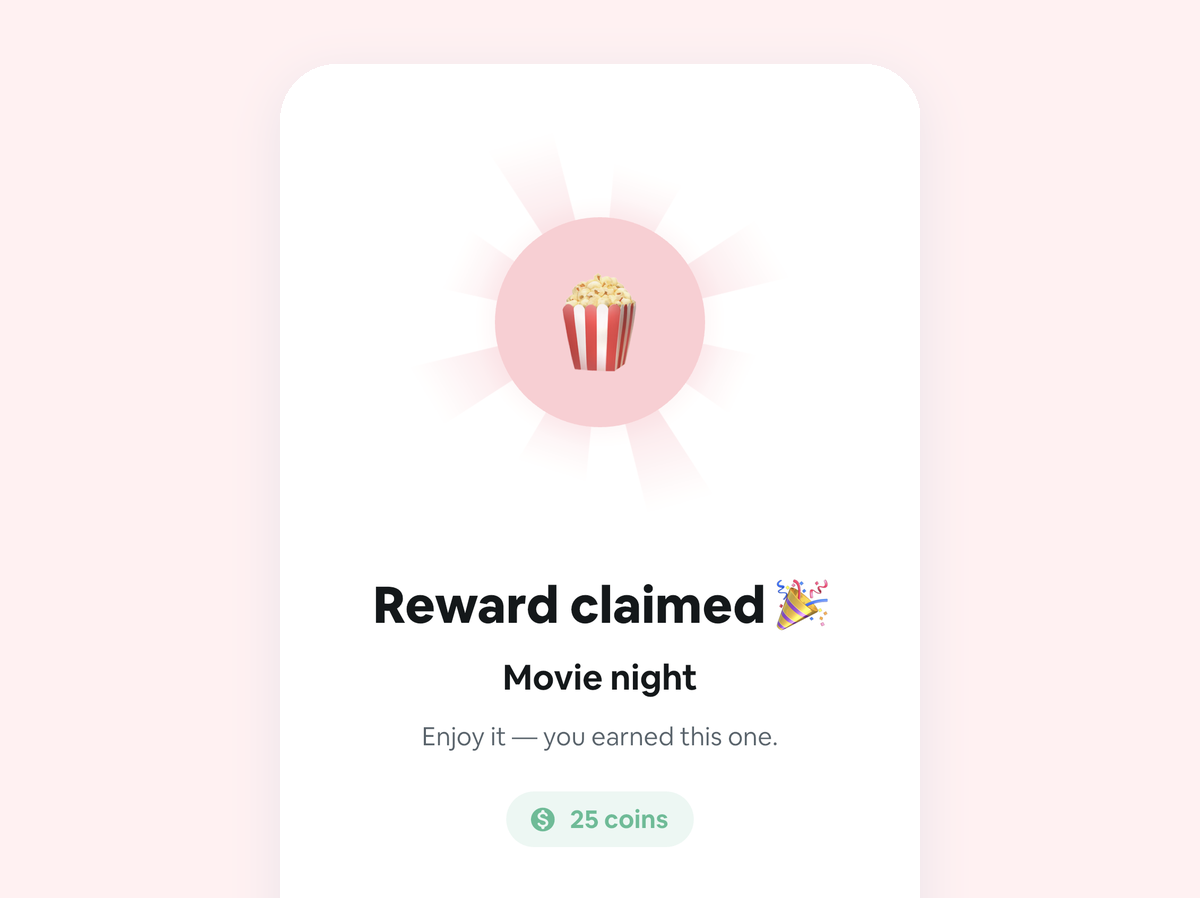
Habit Rewards turns that into a system. Every habit pays coins by how hard it is (1, 4, 8 or 16). You write your own reward list, like a coffee out, a new book, an episode of your show or a lazy Sunday, and give each one a coin price. Check off the workout and you get coins straight away. Claim the reward once your balance covers it. One-off tasks pay coins too, and you can track habits you want to quit.
For the book’s “never miss twice” rule there’s a Skip: if you need a day off, 10 coins keep your streak alive. It’s on iPhone and Android, free for three habits, with a Pro subscription for more.
Good for: habits whose real payoff is a long way off, like exercise, studying and saving, and anyone who already treats themselves and would rather the treat be earned.
Less good if: you want lessons from the book. We don’t have them; Atoms does.
How to pick
Start with the law you break most often. If you forget, make it obvious with Structured. If you can’t get started, make it easy with Routinery. If you start but stop, make it satisfying: HabitKit if seeing the chain is enough, Habit Rewards if you need something to look forward to. If you want the whole book in one place, Atoms. These apps work well together, too.
How the loop behind all of this works: trigger, behavior, reward. Reward ideas to price in coins: 70 ways to reward yourself. The whole field, grouped by what motivates you: the best habit tracker apps.
Habit Rewards is free on iPhone and Android. Atomic Habits is a book by James Clear, and Atoms is made by Atomic Development Inc.; we’re not affiliated with either or with the other apps mentioned.
✅ Try Habit Rewards: the habit tracker that pays you
Every habit pays coins by how hard it is (1, 4, 8 or 16). Write your own reward list, put a coin price on each treat, and claim it once you've earned it.
- Daily, weekly and monthly habits, plus one-off tasks that pay coins
- Reminders, streaks and home-screen widgets
- A 10-coin Skip for the days you can't
- Free for three habits, on iPhone and Android
On a computer? Scan the code with your phone (it opens the App Store or Google Play), or get it on the App Store.

Using Notion?
Start with our free Notion habit tracker and formulas, or get the aesthetic Notion Habit Tracker template with heatmaps and streaks.
More articles you may be interested in:
Free habit tools and printables
Free, in your browser, no sign-up.