
What gamifying your life means
Gamifying your life means borrowing what makes games hard to put down and using it on the things you want to do more often: exercise, reading, chores, studying, going to bed on time.
Games are good at one thing real life is bad at. They pay you right away. You do something, a number goes up, and you can see how close the next reward is. Real habits pay off months later, if at all, and nothing in between tells you it was worth it.
So the job is simple to describe: put a small, visible payoff on every action, and make the payoffs add up to something you want.
Why most attempts fade after two weeks
The usual first try is an RPG sheet: XP for every habit, levels, maybe a character with stats. It’s fun for a week or two. Then the numbers stop meaning anything, because there is nothing to do with them. Level 12 feels the same as level 11.
Three other things kill it:
- Too many quests. Fifteen daily tasks turn the game into a list of things you’re failing at.
- Punishments. Losing points or health for a missed day feels fair on paper. In practice one bad week wipes out your progress and you quit.
- Rules that change every day. If you can always move the goalposts, the score stops being real.
Five game mechanics that work in real life
1. A currency, not just points
This is the one that matters most. XP only goes up. Gold goes up when you earn it and down when you spend it, and spending is the fun part. Pay yourself coins for each habit, and let the coins buy real rewards. Now every check-in moves you toward something specific: a movie night, a new game, a day trip.
2. Quests with clear finish lines
“Exercise more” is not a quest. “Walk for 20 minutes” is. Each daily quest needs a finish line you can’t argue with, so you know when you’ve earned the coins.
3. Difficulty tiers
In games, harder enemies drop better loot. Do the same: easy habits pay a little, hard ones pay a lot. A simple scale is 1, 4, 8 and 16 coins for easy, medium, hard and extreme. Drinking water is easy. Cleaning the kitchen after a long day is hard.
4. Streaks with a safety net
Streaks are powerful because you don’t want to break the chain. They’re also fragile: one sick day and a 40-day streak is gone, and so is your motivation. Give yourself a way out that costs something, like a skip you buy with coins. The streak survives, and the price stops you from skipping every day.
5. A shop with prices
The reward menu is your game’s shop. Write down rewards you actually want and give each one a price in coins. Small rewards should be reachable every few days, big ones in a month or two. Our free dopamine menu builder is a good way to fill the shop.
Bonus mechanic: boss fights. The one-off task you’ve avoided for weeks (the tax form, the dentist call) is a boss. Give it a big coin value and it stops being a chore and starts being a payday.
Set up your game in 20 minutes
- Pick three areas of your life you want to level up. For example health, learning and home.
- Choose one daily quest per area with a clear finish line.
- Price each quest by difficulty: 1, 4, 8 or 16 coins.
- Stock the shop with three small rewards, two medium ones and one big one.
- Hold a weekly patch day. Five minutes on Sunday: make quests you keep failing easier, raise the price of rewards that come too easily.
Here is what a starter game can look like:
| Quest | Difficulty | Coins |
|---|---|---|
| Drink 8 glasses of water | Easy | 1 |
| Read 10 pages | Medium | 4 |
| 30-minute workout | Hard | 8 |
| Deep-clean one room | Extreme | 16 |
And a shop to go with it:
| Reward | Price |
|---|---|
| A good coffee out | 10 coins |
| Movie night | 25 coins |
| A new video game | 120 coins |
| New running shoes | 300 coins |
With these numbers, a solid day earns about 13 coins, so a coffee is a day away and the shoes take a few weeks of steady play. That spread is what keeps it interesting.
Mistakes that end the game
- Starting with ten habits. Three is plenty. Add a fourth when the first three run on their own.
- Buying on credit. “I’ll earn it tomorrow” breaks the economy. Pay first, then claim.
- Penalties. Missing a day should cost you the coins you didn’t earn, nothing more.
- Rewards that undo the work. A week off the gym as the prize for a week at the gym sends you backwards.
Paper or app?
You can run all of this on paper. Our free printable habit tracker has a goal and a reward for each habit, and a 30-day challenge works well as your first “season” with rewards on day 7, 14, 21 and 30. For more ways to turn habits into a game, see apps like Habitica, which compares six gamified trackers.
Paper gets tedious once you’re adding up coins and keeping a running balance by hand. That’s the part an app does better.
Do it in an app
Habit Rewards is a habit tracker built around a coin economy. Each habit pays 1, 4, 8 or 16 coins depending on the difficulty you pick. Your rewards each have a coin price you set, and you claim one when your balance covers it. One-off tasks pay coins too, so boss fights fit right in, and on a day you can’t make it you can buy a skip with coins to keep your streak.
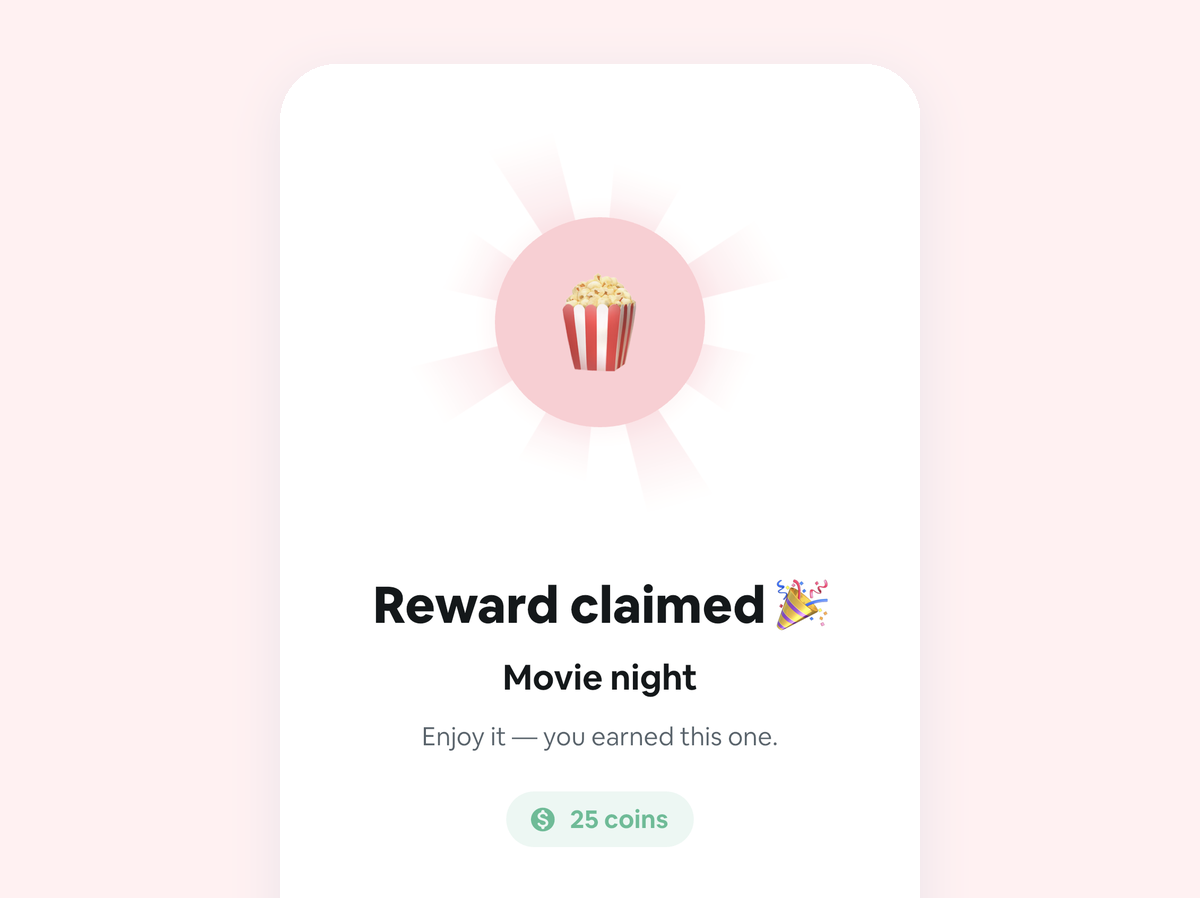
It’s free for up to three habits on iPhone and Android.
FAQ
Isn’t gamifying your life a bit childish? Points and rewards are how loyalty cards, fitness watches and most apps on your phone keep you coming back. Using the same tricks on purpose, for goals you picked, is the grown-up version.
Does gamification help with ADHD? Many people with ADHD find that an immediate payoff makes it easier to start. It’s not a treatment, but it can make routines easier to keep. Our ADHD habit tracker guide has a setup built for that.
How many coins should a reward cost? Price it in days of effort. A small reward costs about one good day, a medium one about a good week, a big one a month or more. Adjust on patch day.
Quick recap
- Pay yourself a currency, not just XP.
- Give every quest a clear finish line.
- Pay more for harder quests.
- Protect streaks with a skip that costs coins.
- Price a shop of rewards you actually want.
- Review the rules once a week, not every day.
✅ Try Habit Rewards App
A simple habit tracker app that helps you build better habits, achieve your goals
- Neat design with beautiful grids
- Visualize your progress at one glance
- Set reminders for your habits
- Customize rewards you desire for your achievements
- Set flexible habits and frequency
- Start now for free
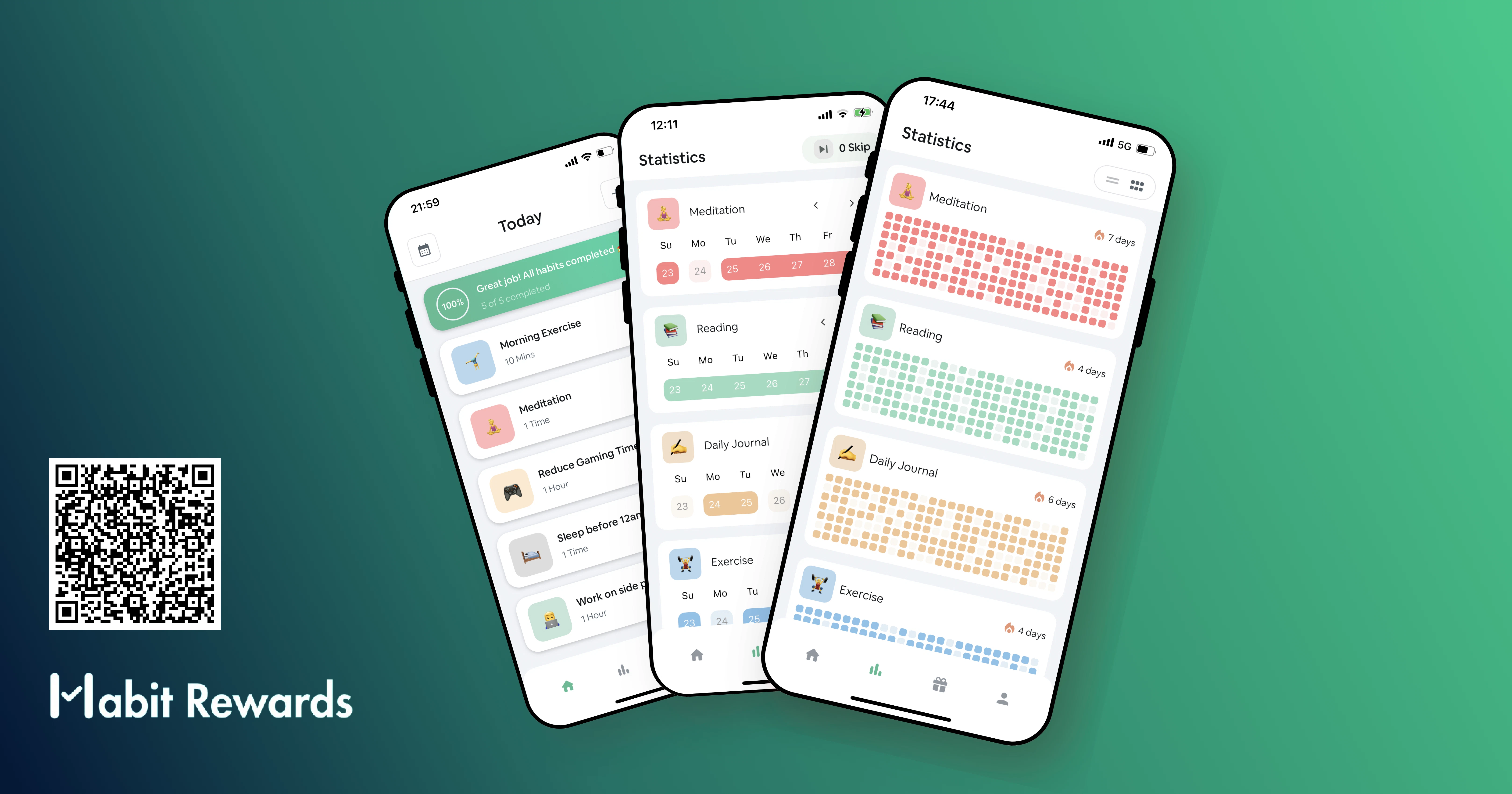
Habit Rewards App is a simple habit tracker with rewards to help your achieve your goals.
Scan the QR code to download from the App Store.

Using Notion?
Build better habits and achieve your goals with this nice Notion Habit Tracker template.
More articles you may be interested in:
Free habit tools and printables
Free, in your browser, no sign-up.