
Why adults use reward charts too
Reward charts are usually something you make for kids: a sticker for brushing teeth, a treat after ten stickers. They work for the same reason with adults. The payoff of most good habits, like better health, savings or a finished degree, is months away. A reward chart puts a small, visible win right after the effort, so the habit has something to show for itself today.
The difference with adults is that nobody else hands out the stickers. You set the rules, you keep the score, and you decide what the rewards are. That makes the design of the chart matter more.
How to make a reward chart that works
1. Start with three habits, not ten
Pick the few habits you most want to stick this month. Three is plenty. A chart with ten habits on it turns into a list of things you’re failing at by the second week.
Make each one specific enough to tick off without debate: “walk 20 minutes” instead of “exercise more”, “read 10 pages” instead of “read more”.
2. Give each habit a points value
Not every habit costs the same effort. A useful rule: the harder or less fun the habit, the more points it pays.
| Habit | Points per day |
|---|---|
| Drink a glass of water after waking up | 1 |
| Read 10 pages | 4 |
| 30-minute workout | 8 |
| An hour of deep work on the side project | 16 |
Keep the numbers simple. You only need enough range that the hard habits clearly pay more.
3. Build a reward menu with prices
This is the part most charts skip, and it’s the part that makes the system fun. Write down rewards you actually want, then give each one a price in points.
Mix three sizes:
- Small (5–20 points): a fancy coffee, an episode of your show guilt-free, a long bath
- Medium (40–100 points): a takeaway dinner, a new book, a movie night out
- Large (200+ points): new running shoes, a concert ticket, a weekend trip
Small rewards keep the first week exciting. Large ones give you something to save for. If a reward is something you would buy anyway, it still counts: the point is that now you earn it.
4. Pay yourself honestly
The chart only works if the points mean something. Two rules help:
- Only claim a reward when you have the points. No borrowing against next week.
- Don’t take the reward anyway on a day you didn’t earn it. If you do, the chart quietly stops working.
If you miss a day, that’s fine. You just don’t earn those points. A missed day costs you a little progress, not the whole system.
5. Review it once a week
Once a week, look at the chart for five minutes and ask:
- Is any habit too easy or too hard for its points? Adjust the value.
- Is there a reward nobody (you) is saving for? Replace it with one you want.
- Has a habit become automatic? Swap it for the next one on your list.
A reward chart is a tool, not a contract. Changing it is part of using it.
Example reward charts
Fitness: workout (8), 10,000 steps (4), stretch before bed (1). Rewards: smoothie (10), a new album (30), running shoes (400).
Study: one focused study session (8), review flashcards (4), tidy desk (1). Rewards: snack break (5), evening off (50), weekend away after exams (500).
Home: dishes done before bed (4), 15-minute tidy (4), plan the week’s meals (8). Rewards: takeaway night (60), a plant or candle (40), a cleaner for a day (300).
Paper chart or app?
A paper chart on the fridge is free and easy to start. It gets harder once you track several habits and save for bigger rewards, because you have to add up points and keep a running balance by hand.
Habit Rewards is a habit tracker built around this exact system. Each habit pays the coins you set for it. Your rewards sit in a list with a coin price. When you complete a habit, you earn its coins. When you have enough, you claim the reward. The app keeps your balance and your streaks, so the weekly review is just a look at the numbers.
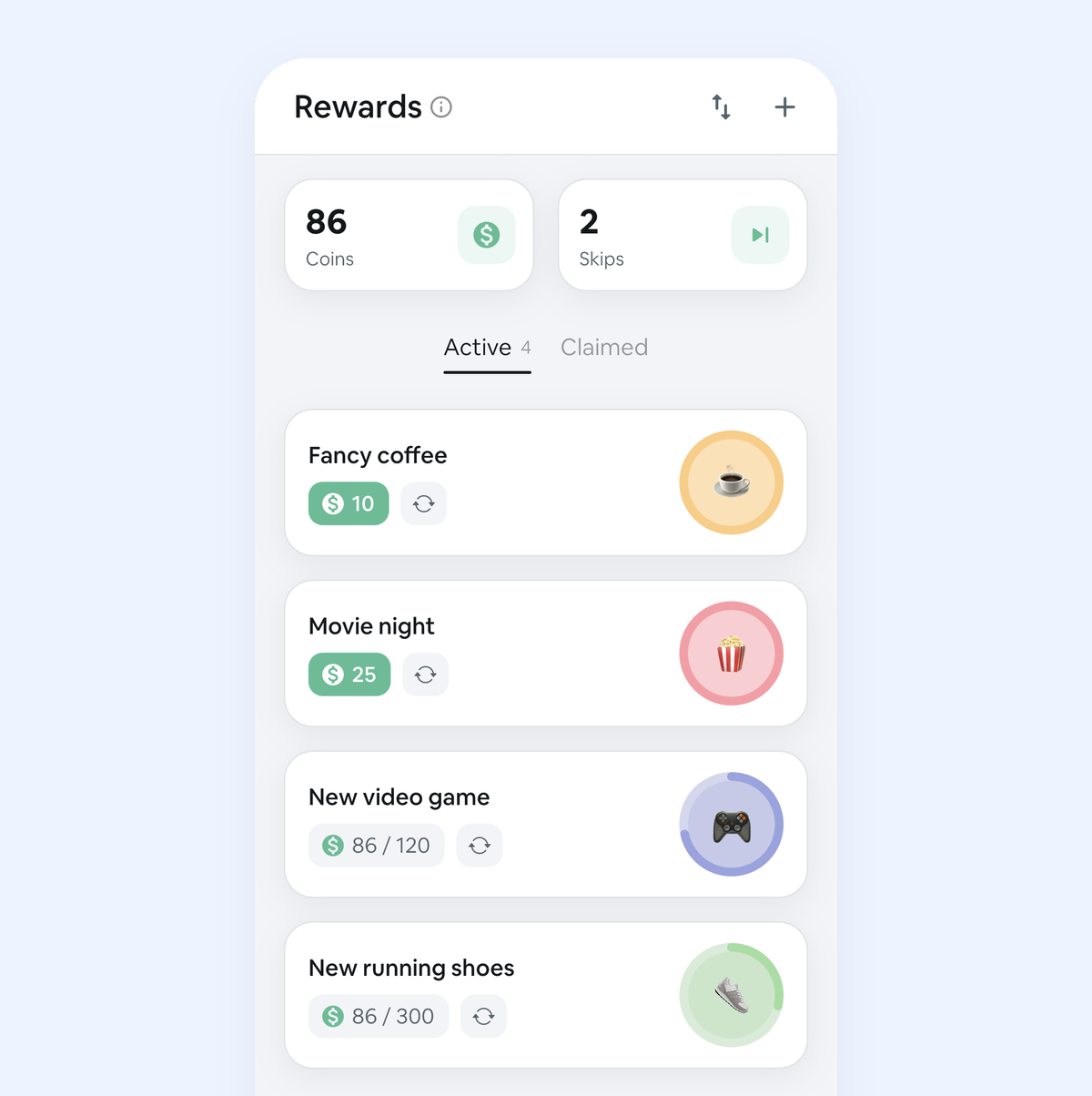
You can start from ready-made reward ideas or write your own. It’s free to download on iPhone and Android.
Quick recap
- Pick three specific habits.
- Give each a points value: harder habits pay more.
- Write a reward menu with small, medium and large prices.
- Only claim what you’ve earned.
- Review and adjust once a week.
That’s a reward chart for adults: a small, honest payoff for the habits that would otherwise pay off only someday.
✅ Try Habit Rewards App
A simple habit tracker app that helps you build better habits, achieve your goals
- Neat design with beautiful grids
- Visualize your progress at one glance
- Set reminders for your habits
- Customize rewards you desire for your achievements
- Set flexible habits and frequency
- Start now for free
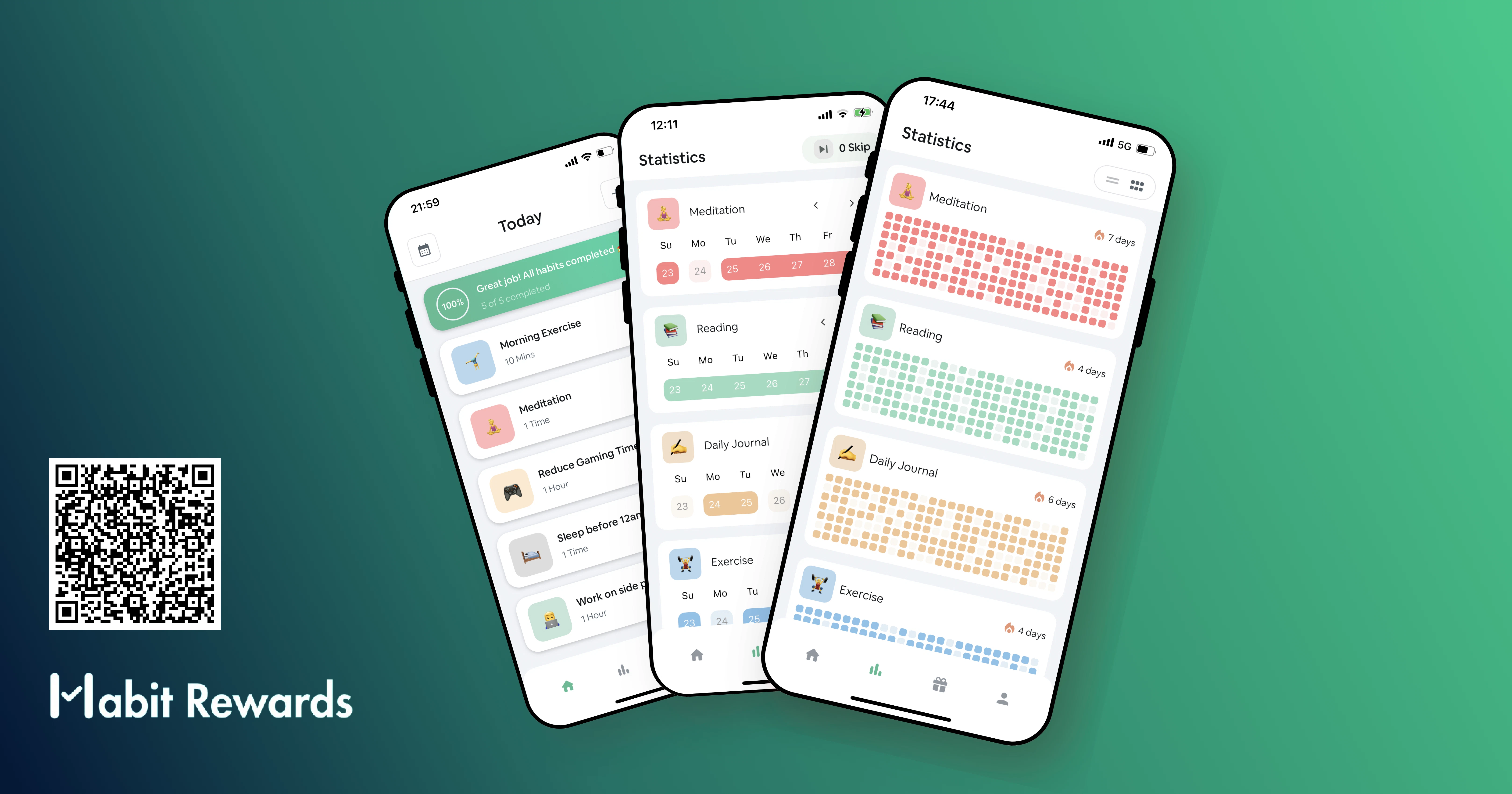
Habit Rewards App is a simple habit tracker with rewards to help your achieve your goals.
Scan the QR code to download from the App Store.

Using Notion?
Build better habits and achieve your goals with this nice Notion Habit Tracker template.
More articles your may be interested in: