
Most people who download a habit tracker stop opening it within a couple of weeks. With ADHD, that drop-off tends to come sooner: the novelty wears off, a busy day breaks the streak, and the app turns into one more thing you’re behind on.
The fix usually isn’t a better app. It’s a different setup. Here is one that’s built around the things ADHD makes hard: waiting for a payoff, remembering, and recovering from a missed day.
A note before we start: this is about habits and motivation, not treatment. If ADHD is getting in the way of daily life, talk to a doctor or an ADHD coach.
Why habit trackers fall apart with ADHD
The payoff is too far away. The reward for most good habits, like fitness, savings or a finished project, arrives months later. Many people with ADHD describe finding it especially hard to work for rewards that are that far off. A checkmark today doesn’t feel like much.
There are too many habits. Setup day feels great, so you add twelve. By Thursday the list is a wall of unchecked boxes, and avoiding the app feels better than looking at it.
One missed day resets everything. A streak of 23 goes back to 0, and it’s tempting to give up rather than start again from zero.
Out of sight, out of mind. If the tracker lives three screens deep on your phone, you’ll forget it exists.
How to set up an ADHD-friendly habit tracker
1. Start with three habits
Pick three. Not three areas of life, three specific actions you can tick off without thinking about whether they count: “glass of water with breakfast”, “10-minute tidy”, “walk after lunch”. When three feel automatic, add a fourth.
If you need ideas, our list of 100 habit tracker ideas is sorted by area.
2. Make every check-off pay something now
This is the part most trackers skip. Instead of waiting for the long-term payoff, give yourself a small, immediate one: points or coins every time you complete a habit. Harder habits pay more:
| Habit | Coins |
|---|---|
| Glass of water with breakfast | 1 |
| 10-minute tidy | 4 |
| Workout | 8 |
| An hour on the thing you’ve been avoiding | 16 |
Psychologists call this kind of setup a token economy: tokens now, exchanged for real rewards later. It’s best known from classrooms and parenting, and plenty of adults run one on themselves. More on that in token economies for adults.
3. Write a reward menu, and price it
Coins only motivate if they buy something you want. Write a list of rewards in three sizes, each with a price:
- Small (5–15 coins): a fancy coffee, an episode of your show, 30 minutes of gaming.
- Medium (30–80 coins): takeaway night, a new book, a movie.
- Big (200+ coins): new headphones, a concert ticket, a day trip.
The small ones matter most. They let you cash in on a good day, which keeps the loop alive. If you already use a dopamine menu, it makes a great starting point: price the items and you have a reward menu.
4. Plan for bad days
You will miss days. Decide now what happens when you do, so a missed day doesn’t become a missed month:
- Don’t restart from zero in your head. 20 of the last 25 days is a great month, even if the streak counter says 2.
- Have a minimum version of each habit for rough days: one page instead of ten, a 5-minute walk instead of 30.
- Allow planned days off. A sick day or a travel day shouldn’t break a streak you worked for.
5. Put it where you’ll see it
Use reminders at the time you’d actually do the habit, not a generic 9 a.m. alarm. Put the tracker on your home screen. If you prefer paper, tape it to the fridge or the bathroom mirror, not in a notebook.
6. Review once a week
Five minutes on Sunday: Which habit did you skip most? Make it smaller or drop it. Is a reward never claimed? Make it cheaper. Is one too easy to earn? Raise the price. The system should get easier to stick to over time, not stricter.
Paper or app?
Paper is free and has no notifications to ignore. It gets harder to keep up once you’re tracking a few habits and saving for bigger rewards, because you have to keep a running coin balance by hand. If you want to start on paper, our printable habit tracker puts a goal and a reward next to every habit.
Habit Rewards is the app we make around this exact setup:
- Each habit pays coins by how hard it is (1, 4, 8 or 16).
- Your rewards sit in a list with a coin price, and you claim one when your balance covers it.
- You can trade 10 coins for a Skip, which protects your streak on a day off.
- Reminders, streaks, one-off tasks that pay coins too, and home-screen widgets.
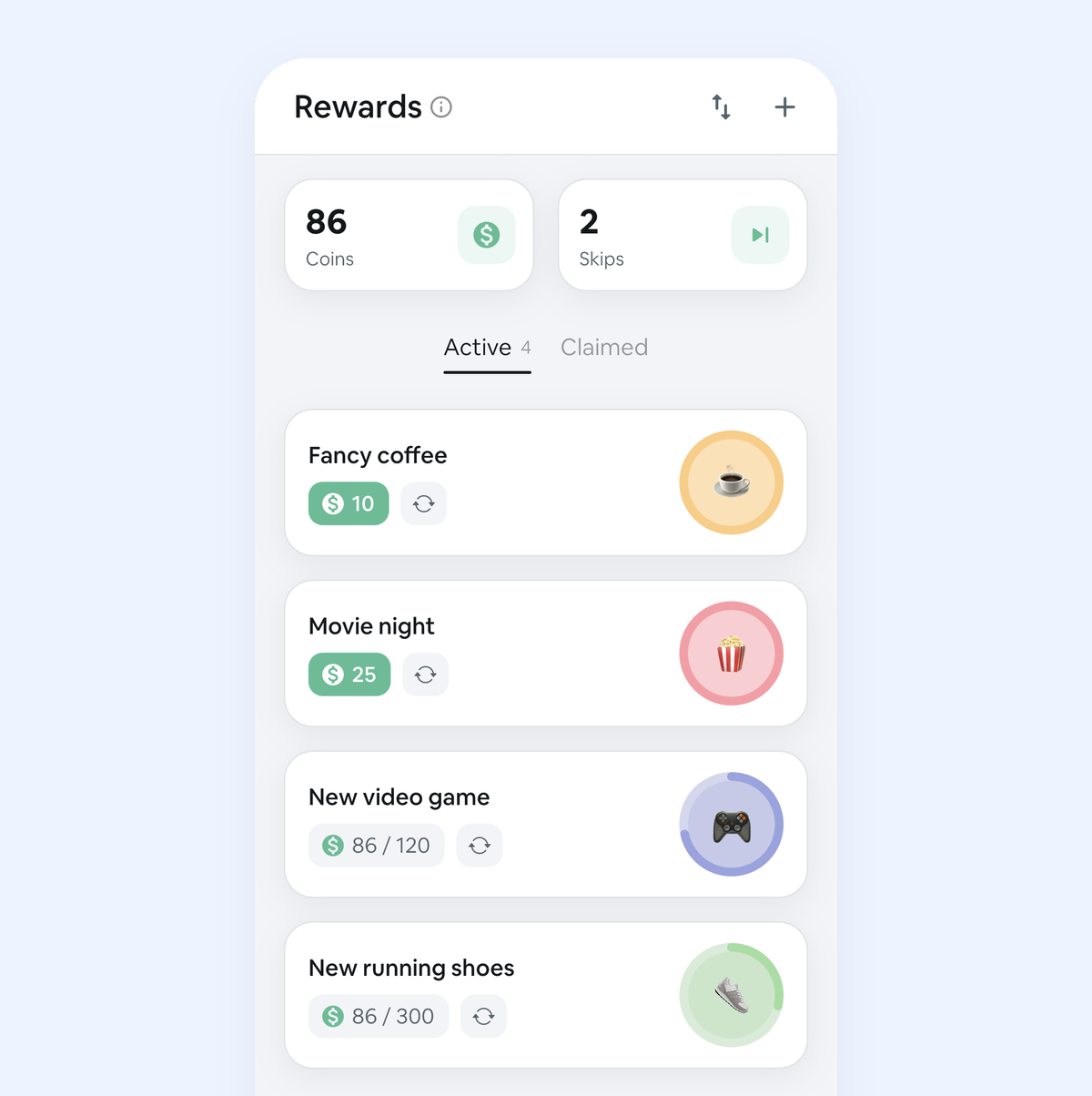
It’s free for three habits on iPhone and Android, which happens to be the right number to start with.
Quick recap
- Three specific habits, no more to begin with.
- Every check-off pays coins right away.
- A priced reward menu with plenty of small rewards.
- A plan for bad days: minimum versions and planned days off.
- Reminders at the real time, tracker on your home screen.
- A five-minute review every week, and make it easier, not harder.
✅ Try Habit Rewards App
A simple habit tracker app that helps you build better habits, achieve your goals
- Neat design with beautiful grids
- Visualize your progress at one glance
- Set reminders for your habits
- Customize rewards you desire for your achievements
- Set flexible habits and frequency
- Start now for free
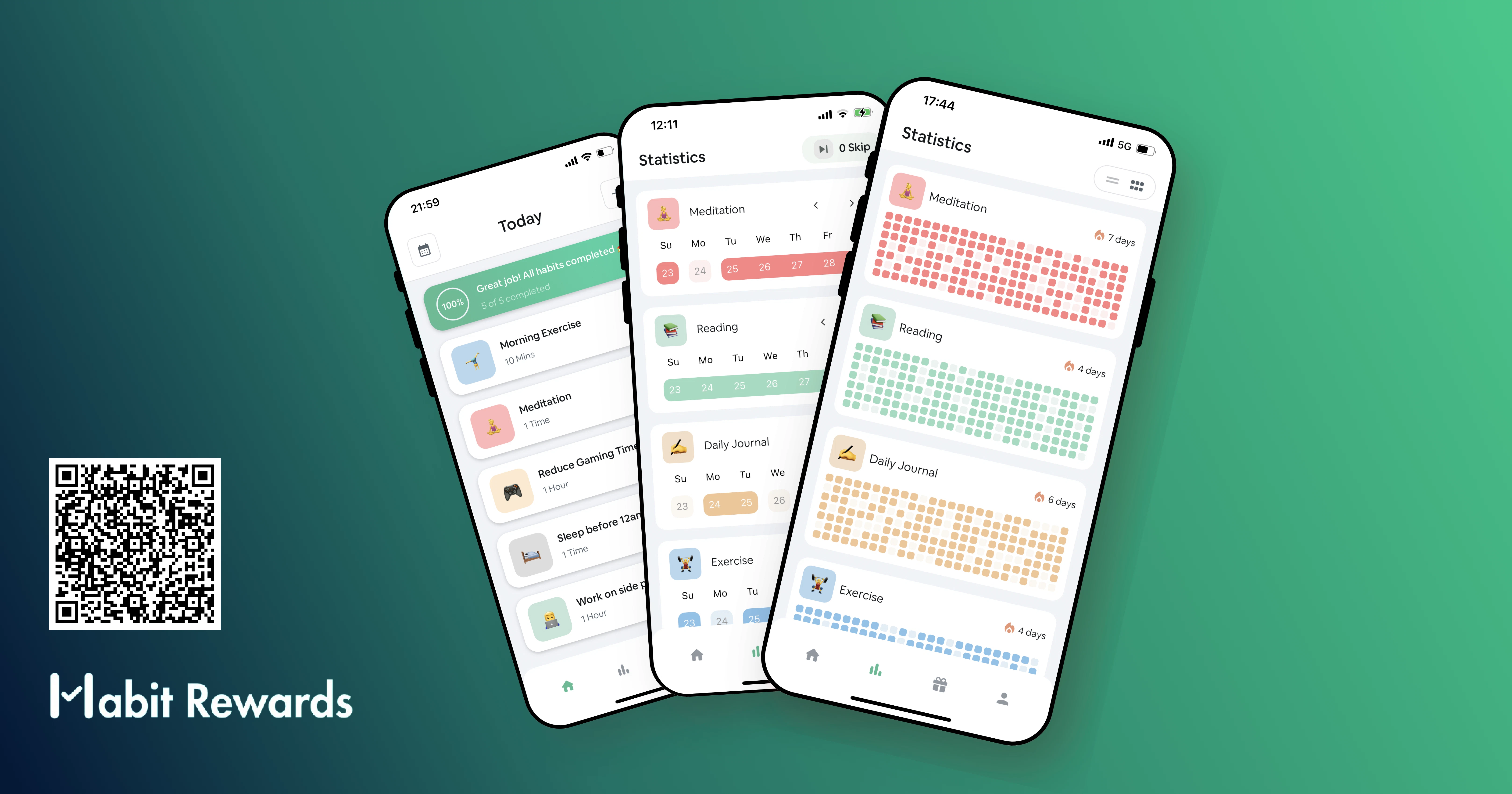
Habit Rewards App is a simple habit tracker with rewards to help your achieve your goals.
Scan the QR code to download from the App Store.

Using Notion?
Build better habits and achieve your goals with this nice Notion Habit Tracker template.
More articles your may be interested in: